
Why Is My Pizza Crust Too Thin? 6 Causes & How to Fix It
Quick answer: Pizza crust usually turns out too thin because the dough ball was too small for the pizza size, the dough got overstretched, too much air was pressed out during shaping, the dough was too warm to control, the center was stretched more than the edges, or the recipe itself is designed for a thin-crust style. Match your dough weight and stretching technique to the crust you actually want, and thickness stops being a guessing game.
Stretched your dough and the center came out paper-thin while the edges look fine? Or the whole crust cracked the second you picked up a slice? This is a common beginner problem, and it’s rarely just one mistake – dough weight, stretching technique, hydration, and even the recipe itself all play a part.

How to Tell What’s Causing It
| What you’re noticing | Most likely cause | What to try |
|---|---|---|
| Thin all over | Dough ball too small for the pizza size | Use more dough, or make a smaller pizza |
| Thin specifically in the middle | Center overstretched | Stretch evenly, rotate as you go |
| Thin and overly crispy | Overstretched or overbaked | Leave the rim intact, watch bake time |
| Tears while stretching | Weak gluten or overstretching | Rest the dough, handle more gently |
| Stretched easily but got away from you | Dough too warm | Chill 10-15 minutes before trying again |
| Matches the recipe’s intended style | Recipe designed for thin crust | Choose a different recipe for a thicker style |
If Dough Handling Keeps Tripping You Up
Getting the right thickness is really about dough weight and technique – the same skills that solve tearing, shrinking, and shaping issues too. The Pizza Dough Problem Solver walks through diagnosing and fixing all of these together instead of one at a time.

1. You Used Too Little Dough
The simplest cause: not enough dough to begin with. Every pizza size needs a matching dough weight – stretch a small ball to a large pizza and the crust naturally thins out beyond what it was built for. A dough ball sized for a 10-inch pizza, for instance, produces a noticeably thin crust if pushed out to 14 inches.
How to fix it: Match your dough weight to your pizza size. If you want a thicker crust, use a larger dough ball rather than stretching the same amount of dough further. Following your recipe’s recommended weight is usually the simplest fix here.

2. You Overstretched the Dough
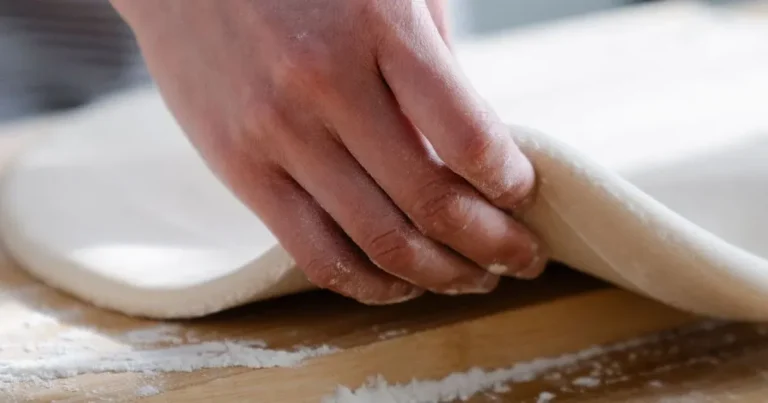
Dough often feels cooperative right up until it isn’t. Every piece has a limit, and pulling past it – especially in the center – thins it out further with each stretch. You gain diameter, but you lose structural strength along the way.
How to fix it: Stretch gradually rather than pulling aggressively, and stop the moment you hit your target size. If it’s already gotten too thin, gather it back together gently and let it rest a few minutes before trying again
3. You Pressed Too Much Air Out
A common beginner habit – flattening the whole dough ball with fingertips or a rolling pin pushes out the gas built up during fermentation, leaving it flat and thin instead of light and airy. Professionals typically leave the outer rim untouched specifically so it can puff into a proper crust while baking.
How to fix it: Press from the center outward, leaving about 1-2 cm around the edge completely untouched. Skip the rolling pin unless your specific recipe calls for it – hand-shaping keeps more of that trapped air where it belongs
4. Your Dough Was Too Warm
Warm dough is soft and stretches easily – which sounds helpful, but it also means very little resistance while you’re shaping it, so it can thin out faster than you intend without you noticing until it’s already too far gone.
How to fix it: Let refrigerated dough warm up only enough to become workable, not for hours on the counter. If it’s gone soft and hard to control, pop it back in the fridge for 10-15 minutes before trying again. If your dough stretches fine but keeps shrinking back afterward rather than staying thin, that’s a related but different issue – see Why Is My Pizza Dough Shrinking?
5. Your Recipe Is Designed for Thin Crust
Not every dough recipe is meant to produce a thick, fluffy result. Neapolitan pizza has a thin center by design, with an airy rim. New York-style is relatively thin but still foldable. Detroit-style, by contrast, is thick and airy, and Sicilian even thicker than a typical round pizza. If you’re following a thin-crust-style recipe, a thin result might simply be exactly what it was built to produce.
How to fix it: Match your recipe choice to the crust style you actually want, rather than expecting every dough recipe to behave the same way.

6. You Stretched the Center More Than the Edges
Probably the most common beginner mistake of all. Repeatedly working the middle while barely touching the outer edge leaves you with a paper-thin center that’s prone to tearing or turning overly crisp in the oven.
How to fix it: Stretch evenly across the whole piece, rotating frequently as you shape it, and let gravity help pull the dough down rather than pulling only on one section by hand. This one mostly comes down to practice – it clicks faster than you’d expect once you start paying attention to it
If You’ve Already Stretched It Too Thin
Don’t panic – depending on how far it’s gone, it’s often still savable:
- Let it rest 10-15 minutes before reshaping
- Gently press the edges inward to reduce the overall diameter slightly
- Avoid working the same spot again and again
- If this keeps happening, use a larger dough ball next time rather than fighting the same amount of dough into a bigger size
- Practice pressing from the center outward while keeping that outer rim untouched
If it’s torn or genuinely too thin to recover, baking it as an intentionally thin-crust pizza this round and adjusting dough weight next time – is usually the more practical move than trying to force a rescue.
Frequently Asked Questions
Why Is My Pizza Crust Too thin in the middle
This usually happens when too much dough is stretched outward toward the edges, or when the center is overworked during shaping. Stretch more evenly and leave a slightly thicker center.
How to make your pizza crust thick?
Use more dough per pizza, let it rise longer for extra air pockets, and avoid over-stretching. A higher hydration dough with a longer fermentation also helps create a thicker, airier crust.
What makes pizza dough soft and fluffy?
Proper fermentation time, enough yeast activity, and adequate hydration all contribute to a soft, fluffy texture by creating air pockets throughout the dough as it rises.
How to make the perfect thin crust pizza dough?
Use a lower hydration dough, roll or stretch it thin and evenly, dock the surface to prevent bubbling, and bake at a high temperature for a crisp, thin result.
Can I let my pizza dough rise longer than 30 minutes?
Yes, letting dough rise longer, even several hours or overnight in the fridge, typically improves flavor and texture by allowing more complete fermentation and gluten development.
Why is my pizza dough tough after baking
Tough crust is usually caused by over-kneading, too little hydration, or under-proofing, all of which prevent the dough from developing a light, tender texture.
Why is my pizza dough hard to stretch
This is usually due to under-resting the dough or gluten that’s too tight from kneading. Let it rest longer at room temperature so the gluten relaxes before stretching
Pizza dough too soft and sticky
This usually means the dough has too much hydration or hasn’t had enough flour incorporated during kneading. Add flour gradually until it reaches a workable, tacky but manageable texture.
How to make soft crust pizza in oven
Use a higher hydration dough, bake at a slightly lower temperature, and avoid overbaking. Brushing the crust with olive oil after baking also helps keep it soft.
How to keep pizza crust from getting hard when reheating
Reheat in a skillet over low heat with a lid, or in the oven at a moderate temperature, rather than the microwave, which tends to make crust chewy or hard.
How to soften pizza crust in microwave
Place a damp paper towel over the pizza slice before microwaving in short bursts; the steam helps soften the crust without making it too chewy or rubbery.
Why does my dough tear instead of just getting thin?
Tearing usually points to weak gluten development, not enough resting time, or genuine overstretching – worth checking Why Is My Pizza Dough Tearing? if that’s the bigger issue for yo
Final Thought
A too-thin crust almost always comes down to dough weight, stretching technique, or air handling not a ruined batch. Choose the right amount of dough for your pizza size, stretch gently and evenly, and preserve that outer rim, and you’ll land on a crust that matches what you were actually going for