How to Stretch Pizza Dough Without Tearing
(A Beginner-Friendly Guide That Actually Works)

Quick Answer
How to Stretch Pizza Dough Without Tearing
The easiest way to stretch pizza dough without tearing is to let it rest until it’s relaxed, work with room-temperature dough and gently stretch it with your fingertips instead of pulling too hard. If the dough keeps shrinking or tearing, let it rest for another 15–20 minutes before trying again
Table of Contents
Why Does Pizza Dough Tear When Stretching?
Many people think tearing means they’ve ruined the dough.. In reality, tearing is usually a sign that the dough isn’t quite ready yet
The most common reasons include:
- the dough hasn’t rested long enough
- the gluten is still too tight
- the dough is too cold
- it hasn’t been kneaded enough
- it’s being stretched too quickly
- it’s become dry from being left uncovered
The encouraging part is that every one of these problems has a simple solution. Once you understand what’s causing the tear, it’s much easier to prevent it the next time
Let the Dough Rest Before You Stretch It
One of the biggest mistakes beginners make is trying to stretch pizza dough the moment they take it out of the refrigerator. Cold dough is tight. Tight dough fights back
If you’ve ever stretched the dough only to watch it snap back into a smaller circle, that’s exactly what’s happening..
Instead, let the dough rest at room temperature for about 30 to 60 minutes. This gives the gluten time to relax, making the dough softer, more flexible, and much easier to shape
Think of it this way:
- You’re not waiting because the dough is lazy
- You’re waiting because it needs time to loosen up
- That little bit of patience often makes the biggest difference
Once the dough has relaxed, stretching becomes much easier..
Now it’s time to focus on how you stretch it, because your technique matters just as much as the dough itself
How to Stretch Pizza Dough With Your Hands
You don’t need special equipment or years of experience to stretch pizza dough well.. You just need the right technique
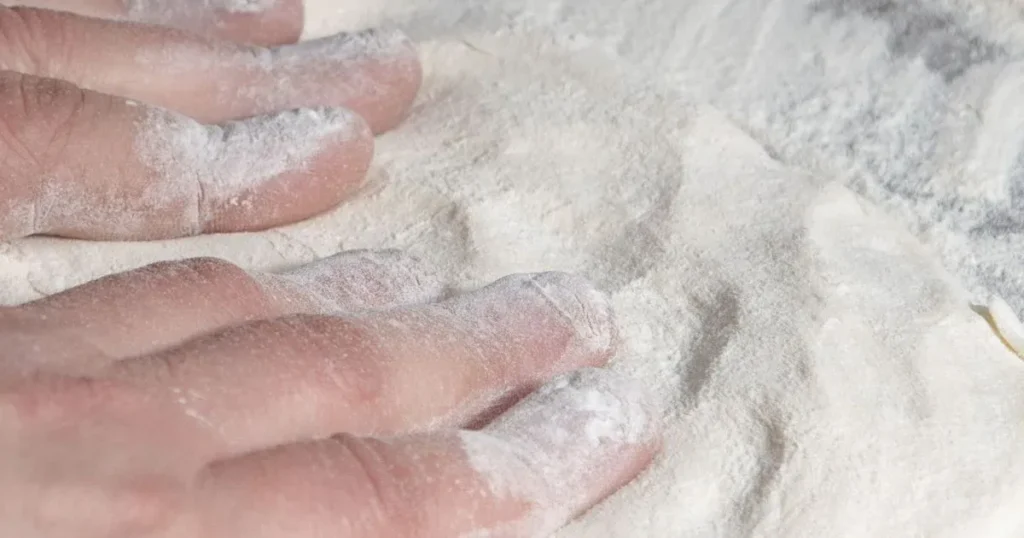
Once the dough has rested and reached room temperature, lightly dust your work surface with flour and place the dough in the centre
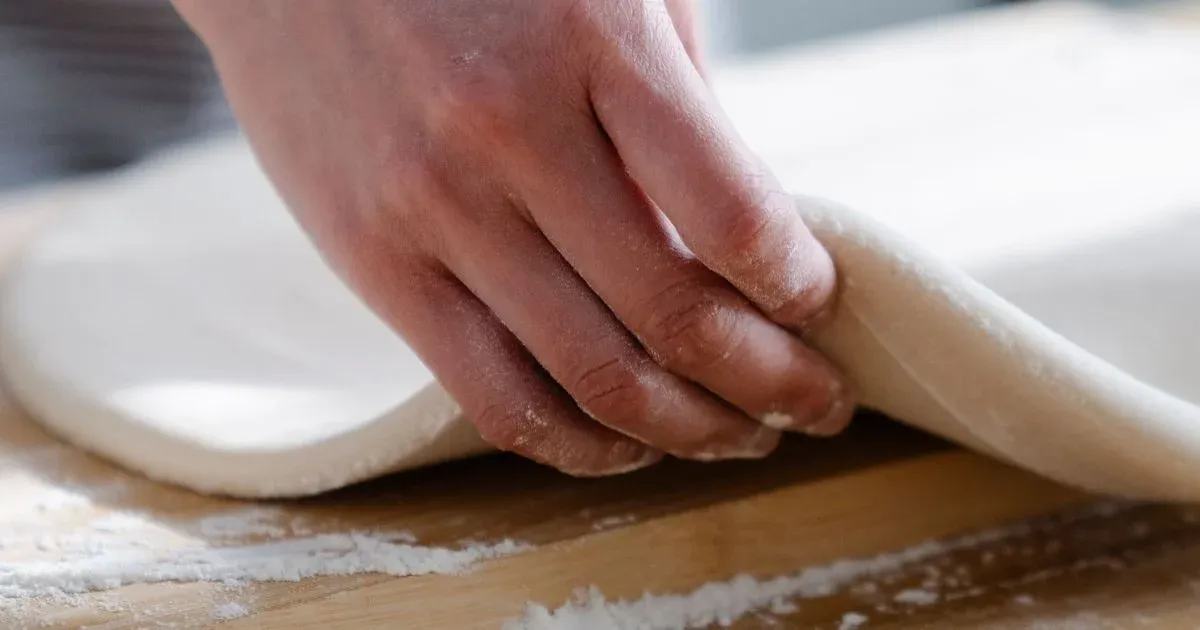
Instead of grabbing the edges and pulling, start by pressing gently with your fingertips. Work from the centre outward, leaving about 1 inch (2.5 cm) around the edge untouched. That thicker edge becomes the crust
As the centre becomes thinner, pick up the dough and let gravity help.. Rest the dough across the backs of your hands or your knuckles and slowly rotate it
There’s no need to rush. If the dough resists, stop stretching and let it rest for another 10–15 minutes before trying again
Sometimes the dough simply needs a little more time

Should You Use a Rolling Pin?
This surprises a lot of people.. A rolling pin isn’t wrong. It’s just not the best choice if you’re trying to make a classic Italian-style pizza. When you roll the dough flat, you press out many of the tiny air bubbles created during fermentation
Those air bubbles are what help produce a light, airy crust. That’s why many pizza makers prefer stretching the dough by hand. If you’re making a thin, crispy pizza at home, using a rolling pin is perfectly fine. But if you’re aiming for a soft, puffy crust with a chewy edge, stretching by hand usually gives better results
Why Does My Pizza Dough Keep Shrinking?
Few things are more frustrating than stretching pizza dough into a nice circle…
…only to watch it shrink back a few seconds later. This happens because the gluten is still too tight. The dough is basically pulling itself back into shape. The easiest solution is surprisingly simple
Stop.
Cover the dough with a clean towel and let it rest for another 10 to 20 minutes. When you come back, you’ll often find that it stretches much more easily. Trying to force tight dough almost always leads to tearing
Giving it time usually solves the problem

How to Stretch Pizza Dough Without Sticking
Sticky dough doesn’t automatically mean you’ve made it wrong. In fact, good pizza dough should feel slightly tacky, not completely dry
If it’s sticking to everything, try these simple fixes:
- Lightly flour your hands
- Dust your work surface with a small amount of flour
- Keep the dough moving instead of letting it sit in one place
- Shake off excess flour before adding toppings
Avoid adding large amounts of flour while stretching. Too much flour can make the finished crust dry and tough. Sometimes the better solution is simply letting the dough rest for a few more minutes rather than covering it with extra flour
Even when your dough is well rested and you’re using the right technique, a few common habits can still cause problems
Fortunately, they’re easy to avoid once you know what they are
Common Mistakes When Stretching Pizza Dough
Even good pizza dough can tear if it’s handled the wrong way. These are the mistakes that cause the most problems
- Stretching cold dough Cold dough is firm and tight. If you take it straight from the refrigerator and try to stretch it immediately, it will resist and is much more likely to tear. Always let it come to room temperature first
- Pulling from the edges It’s tempting to grab the edge of the dough and pull. The problem is that all the pressure is placed in one small area, making it easier to rip. Instead, press from the centre outward and let the dough stretch gradually
- Rushing the process Pizza dough isn’t something you can force. If it keeps shrinking or fighting back, it’s telling you it needs more time to rest. A short break often works better than using more force
- Using too much flour A light dusting of flour helps prevent sticking. Too much flour dries out the surface and can leave the finished crust tough instead of soft and chewy
- Ignoring small tears If you notice a tiny tear forming, stop stretching that area. Gently pinch it closed before continuing. Small tears are easy to fix. Large ones usually happen when you keep pulling
Quick Checklist
Before You Stretch Pizza Dough Before you begin, make sure you’ve checked these five things:
- The dough has rested at room temperature
- It feels soft and relaxed
- Your work surface is lightly floured
- You’re pressing from the centre outward
You’re letting gravity help instead of pulling too hard. If you’ve ticked every box, you’re already giving yourself the best chance of stretching the dough without tearing
Frequently Asked Questions
What is the best way to stretch pizza dough without tearing it?
Let the dough rest until it reaches room temperature, then gently press it outward with your fingertips before lifting it onto your knuckles. Avoid pulling hard from the edges, and let gravity do most of the work
How long should pizza dough rest before being stretched?
If the dough has been refrigerated, let it rest at room temperature for 30 to 60 minutes before stretching. If it keeps shrinking, give it another 10 to 20 minutes to relax
What are some of the common mistakes when stretching pizza dough?
The most common mistakes are stretching cold dough, pulling too hard, using too much flour, rushing the process, and trying to force dough that hasn’t rested long enough
Why does my pizza dough tear when stretching?
Pizza dough usually tears because it’s too cold, hasn’t rested enough, wasn’t kneaded properly, or is being stretched too aggressively. Letting the dough relax often solves the problem
How to stretch pizza dough without flour?
If your dough was made and hydrated properly, you can lightly oil your hands and work surface instead of using flour. Just remember that a little sticking is normal, so work gently and keep the dough moving
How to stretch pizza dough without rolling pin?
Use your fingertips to flatten the centre first, then lift the dough onto your knuckles and slowly rotate it. This keeps more air inside the dough and helps create a lighter crust
How to stretch pizza dough without it shrinking?
If the dough keeps shrinking, stop stretching and let it rest for another 10 to 20 minutes. Tight gluten needs time to relax before it becomes easier to shape
How to stretch pizza dough without sticking?
Lightly flour your hands and work surface, or use a small amount of oil. Avoid adding too much flour because it can dry out the dough
Pizza dough won’t stretch without tearing. What should I do?
Don’t force it. Let the dough rest, then try again using gentle pressure from the centre outward. Most dough becomes much easier to stretch after a short rest
How to shape pizza dough with hands?
Start by pressing the centre with your fingertips while leaving a thicker border around the edge. Once the dough begins to widen, lift it onto your knuckles and rotate it slowly until it reaches the size you want
How to roll out pizza dough without rolling pin?
Press the dough flat with your fingertips, then gently stretch it with your hands. This method preserves the air bubbles that help create a light, airy crust
How to stretch pizza dough with rolling pin?
If you’re making a thin, crispy pizza, a rolling pin works well. Roll from the centre outward, turning the dough as you go. Just keep in mind that rolling pins remove some of the air that gives pizza crust its rise
Final Thoughts

Learning to stretch pizza dough isn’t about strength. It’s about patience. Once you stop fighting the dough and start working with it, the whole process becomes easier. The next time your dough tears, don’t assume you’ve failed. Take a breath. Let it rest. Then come back and try again. You might be surprised by how much difference a few extra minutes can make
You May Also Like
- Easy Homemade Pizza Dough for Beginners
- Why Is My Pizza Dough So Sticky?
- Why Didn’t My Pizza Dough Rise?
- How Long Does Pizza Dough Last in the Fridge?
- Can You Freeze Pizza Dough