Overproofed Pizza Dough: Signs, Causes & How to Fix It
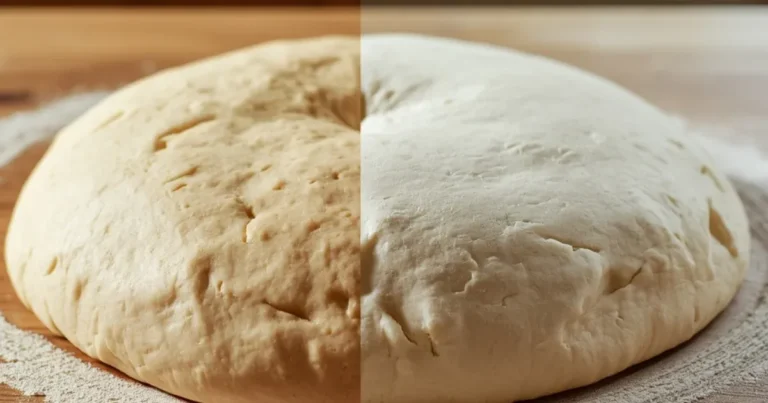
Quick answer: Pizza dough is overproofed when it’s risen past its ideal point – the yeast has kept producing gas so long that the gluten structure weakens and can no longer support it. The dough looks very puffy but collapses easily, feels weak, and struggles to hold its shape. It’s usually caused by leaving it too long, a too-warm environment, too much yeast, or an extended stay in the fridge. Slightly overproofed dough can often still be saved; severely overproofed dough usually can’t recover fully
Your dough doubled maybe tripled and looked beautifully puffy right up until you tried to shape it, and it collapsed, felt weak, or just wouldn’t hold together. Overproofing is one of the most common home pizza mistakes, and the good news is that catching it early usually means you can still salvage the batch.
Signs Your Dough Is Overproofed
- Grown much larger than expected
- Collapses at a gentle touch
- Feels very soft, difficult to handle
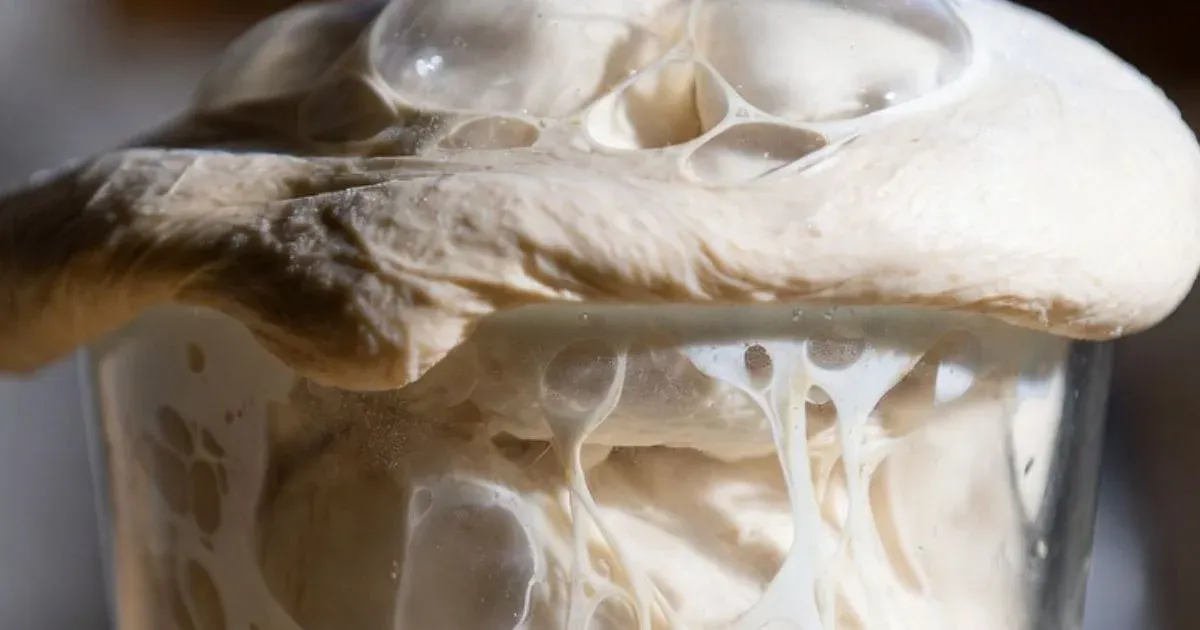
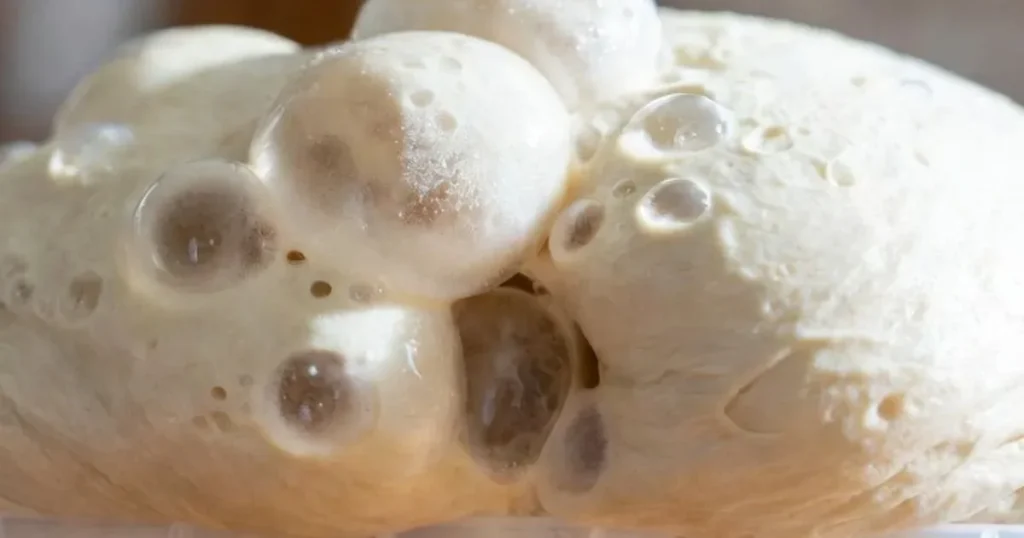
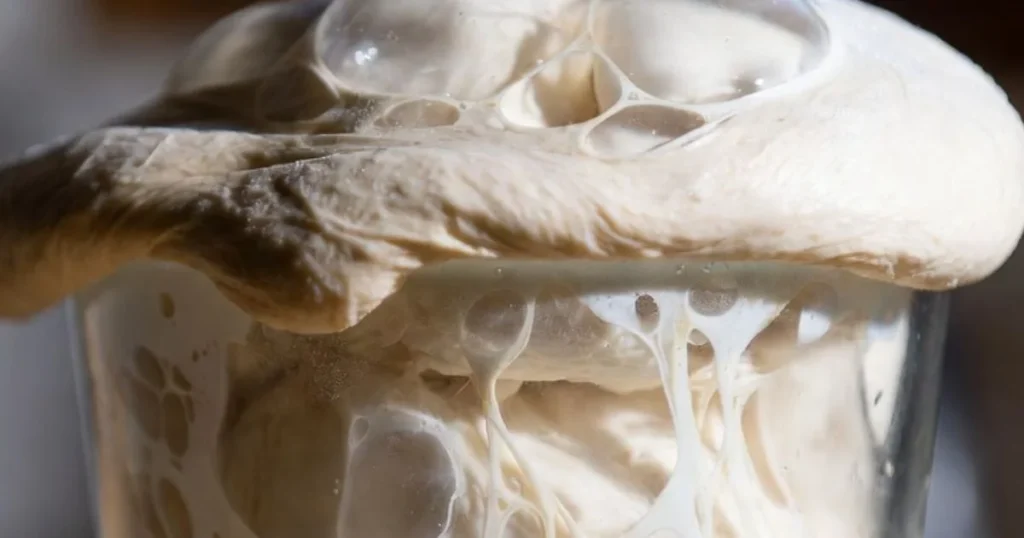
- Large air bubbles visible throughout
- Spreads out instead of holding shape
- Doesn’t spring back after a gentle poke
- Bakes flat or dense despite rising well earlier
Several of these together is a strong signal you’ve gone past the ideal proofing point.
Overproofed vs. Underproofed – Know Which One You’re Dealing With
| Overproofed Dough | Underproofed Dough |
|---|---|
| Very puffy and weak | Small and tight |
| Collapses when touched | Springs back immediately |
| Difficult to shape | Hard to stretch |
| Bakes flat with poor oven spring | Bakes dense with little air inside |
These need opposite fixes, so misdiagnosing one as the other usually makes things worse rather than better. If your dough matches the right column instead, Why Didn’t My Pizza Dough Rise? covers underproofing specifically.
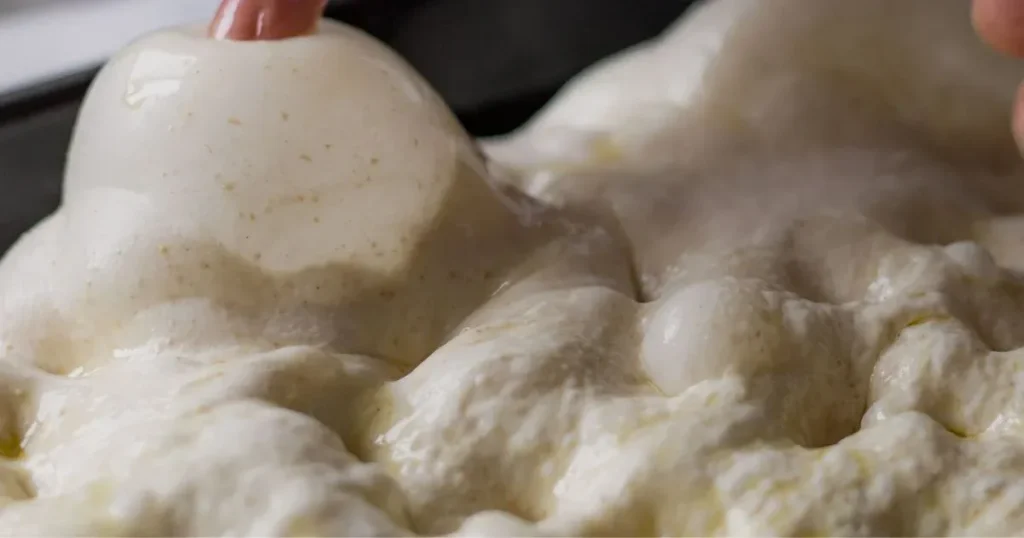
The Finger-Poke Test – The Fastest Way to Check
Press the dough gently with a floured fingertip:
- Springs back immediately → underproofed, needs more time
- Springs back slowly, leaves a slight dent → properly proofed, ready to go
- Doesn’t spring back, indentation stays, dough may collapse → overproofed
This beats watching the clock, since proofing speed depends entirely on your specific kitchen and yeast amount.
Overproofing Just One of Several Dough Struggles?
If proofing timing isn’t your only challenge – sticky, dry, cracking, or shrinking dough too – The Pizza Dough Problem Solver walks through diagnosing and fixing each of these individually.

1. You Let It Rise for Too Long
The most common cause, by far. Yeast keeps working as long as it has food and a suitable temperature – leave dough on the counter well past its recommended window and the gluten eventually weakens, taking the dough’s structure down with it.
How to fix it: Follow your recipe’s proofing time as a starting guide, but check the dough regularly rather than trusting the clock alone. Once it’s doubled, it’s usually ready to move to the next step – no benefit to waiting longer
2. The Dough Was Too Warm
Temperature drives proofing speed more than most people expect. A warm kitchen or dough placed near a heat source speeds up yeast activity well beyond what the recipe assumed – this is especially common in summer or any kitchen running above 75°F (24°C).
How to fix it: Proof somewhere cooler, shorten the proofing time if your kitchen runs warm, or refrigerate the dough if needed to slow fermentation back down to a manageable pace.
3. You Used Too Much Yeast
More yeast doesn’t mean better pizza – it means faster fermentation, which makes it much easier to blow past the ideal proofing window before you’re actually ready to bake.
How to fix it: Measure yeast carefully rather than guessing or rounding up “for good measure.” For long or overnight fermentation especially, use the smaller yeast amount your recipe specifies – that’s intentional, not a typo
4. The Dough Stayed Too Long in the Refrigerator
Cold fermentation slows yeast activity significantly, but it doesn’t stop it entirely. Left in the fridge for several days, dough can still eventually overproof – showing up as very puffy, a strong fermented smell, and a weak feel when handled.
How to fix it: Use refrigerated dough within your recipe’s recommended window, and check daily if you’re cold-proofing for several days. If it’s expanded dramatically inside its container, it’s likely close to (or already past) overproofed.
5. You Proofed the Dough Twice for Too Long
Many recipes call for two rises – a bulk rise after mixing, and a second after dividing into balls. Problems compound when both stages run long, leaving the dough with little structural strength left by the time you’re ready to shape it.
How to fix it: Follow the recommended time for each stage individually. If the first rise already hit double, don’t let it keep going. Watch the second proof especially closely, since divided dough balls often rise faster than the bulk dough did.
6. You Misjudged When the Dough Was Ready
A common beginner assumption: bigger is always better, so why not let it rise as much as possible? In reality, once dough has proofed enough, continuing to let it rise just weakens the gluten rather than improving anything.
How to fix it: Use the finger-poke test instead of chasing maximum size. Learning to recognize properly proofed dough is far more reliable than waiting longer on the theory that more time always helps.
Rescue Options: Can You Save Overproofed Dough?
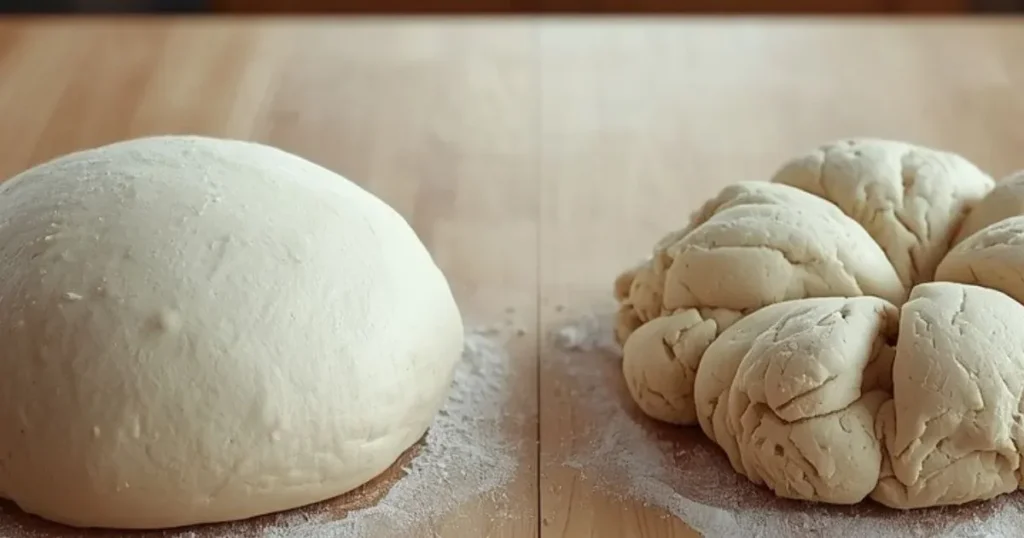
If it’s only slightly overproofed: yes, usually. Handle it gently, reshape carefully, and avoid pressing out all the trapped air while shaping – you’re trying to preserve what structure is left, not knock it out. Bake as soon as you reasonably can rather than letting it sit any longer.
If it’s collapsed completely, feels extremely weak, or won’t hold shape at all: it’s likely past recovery. Still probably edible, but the finished pizza will likely bake flatter with a noticeably weaker texture than you were going for.
A few specific don’ts:
- Don’t knead it again – that removes what gas is left and tends to produce an even denser crust than just baking it as-is
- Don’t try a second full rise – once gluten has weakened significantly, it generally can’t trap gas efficiently a second time
- Do bake it sooner rather than later if you’ve caught it early – every extra minute past the ideal point makes the rescue harder
The real lesson: catching overproofing early, before it collapses entirely, is what determines whether the batch is saveable or not. Checking regularly beats discovering the problem only once the dough’s visibly overflowing its container.
Preventing It Next Time
- Watch the dough itself, not just the clock
- Proof somewhere cool if your kitchen runs warm
- Measure yeast accurately – don’t round up
- Refrigerate the dough if you’re not ready to bake on schedule
- Use the finger-poke test before deciding it’s ready
Frequently Asked Questions
How do I fix overproofed pizza dough?
Gently deflate the dough by folding it a few times to redistribute the yeast and gas, then let it rest briefly before shaping. It won’t be perfect, but this can salvage texture
What happens if I let my pizza dough rise too long?
Overproofed dough becomes weak and collapses easily, loses its structure, and can taste slightly sour or yeasty, resulting in a denser, less airy crust after baking.
Can I still make pizza with overproofed dough?
Yes, you can still use it, though the crust may be denser and less airy than properly proofed dough. Gently reshaping it can help minimize the impact on texture.
How do I know if I overproofed my pizza dough?
Overproofed dough looks puffy but fragile, doesn’t spring back when poked, and may have a slightly sour smell. It often collapses or tears easily when handled.
Overproofed pizza dough recipe
There isn’t a specific recipe for overproofed dough, but you can rescue it by deflating and reshaping it, then using it for flatbread or focaccia instead of traditional pizza.
What does over proofed pizza dough look like
It appears overly puffy, loose, and may have visible large bubbles or a slightly deflated look. It often feels fragile and doesn’t hold its shape well when touched.
How to make overproofed pizza dough
Overproofing isn’t intentional, it happens when dough rises past its ideal point. If this occurs, gently deflate and reshape it rather than trying to recreate the effect deliberately
How to use overproofed pizza dough
Deflate it gently, then repurpose it into focaccia, flatbread, or breadsticks, which are more forgiving of a denser, less structured texture than traditional pizza crust.
Overproofed pizza dough focaccia
Overproofed dough works well for focaccia since its looser structure suits focaccia’s naturally airy, dimpled texture better than a traditional stretched pizza base.
Can you eat over-proofed pizza dough
Yes, it’s safe to eat. The texture and flavor may be denser or slightly sour, but overproofing is a texture issue, not a food safety concern.
Can pizza dough overproof in the fridge
Yes, though it happens more slowly than at room temperature. Extended fridge storage, especially beyond 2–3 days, can still lead to overproofing and weakened gluten structure.
Overproofed sourdough pizza dough
Overproofed sourdough pizza dough becomes overly slack and may taste more sour than intended. Gently deflating and reshaping it can help, though the texture will be denser.
Final Thought
Overproofed dough isn’t automatically a disaster – catch it early, before it fully collapses and you can usually still make a solid pizza out of it. The real fix is prevention: watch the dough rather than the clock, proof at a reasonable temperature, measure yeast carefully, and use the finger-poke test to judge readiness instead of guessing by size alone.