Why Is My Pizza Dough Dry? 6 Causes & Quick Fixes
Quick answer: Dry pizza dough almost always comes from too much flour, not enough water, or moisture escaping while the dough rested, refrigerated, or proofed too long. It’s rarely the recipe’s fault it’s moisture loss somewhere along the way. Fix the specific cause below and your next batch stays soft and stretchy
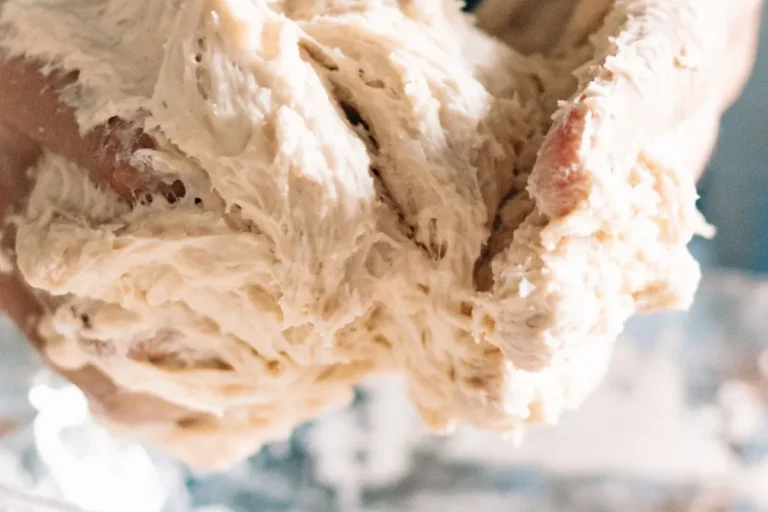
If your dough feels stiff, dull, and difficult to work with by the time you’re ready to shape it, you’re dealing with one of the most common and most preventable pizza problems there is.
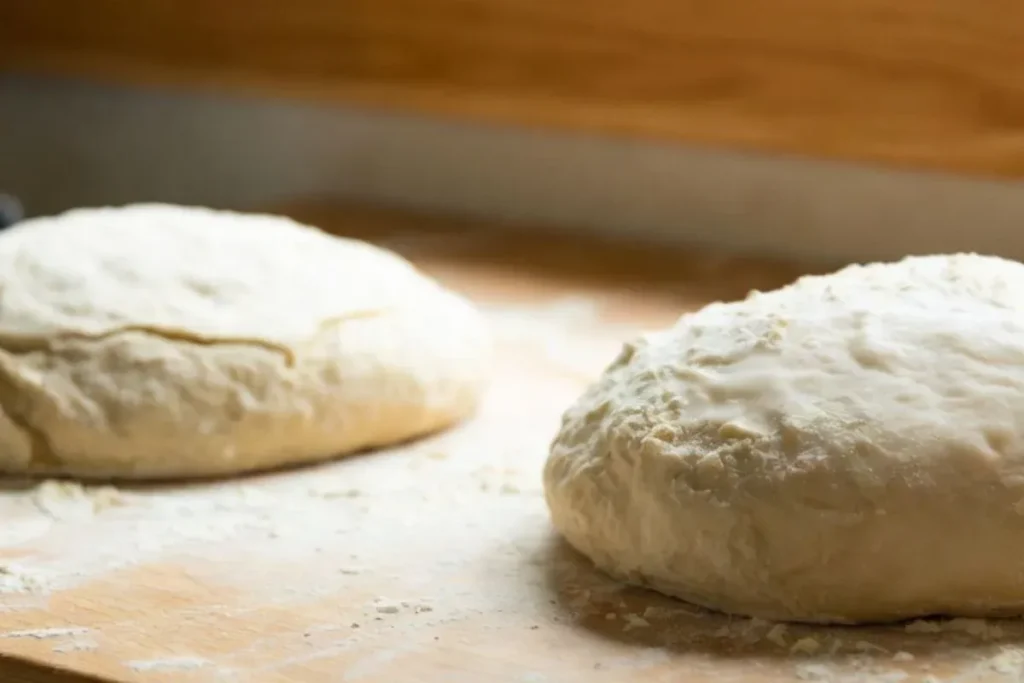
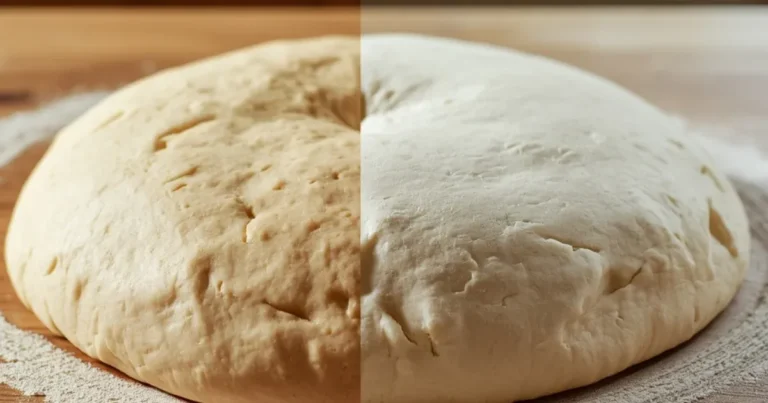
Signs Your Dough Is Actually Too Dry
- Feels stiff instead of soft
- Surface looks dull or rough
- Small cracks appear when you stretch it
- Tears instead of stretching smoothly
- Feels crumbly around the edges
- Doesn’t puff up well in the oven
A few of these showing up together usually points straight to one of the causes below.
How to Tell What’s Causing It
| What you’re noticing | Most likely cause | What to try |
|---|---|---|
| Dough feels stiff, was sticky then got dusted repeatedly | Too much flour | Measure by weight, stop adding “a little more” |
| Rough, cracks easily even before stretching | Not enough water | Follow the recipe’s hydration exactly |
| Dry, thin skin formed on the surface | Left uncovered while resting | Cover fully during every rest |
| Leathery or crusty after a night in the fridge | Fridge dried it out | Store airtight, lightly oil the surface first |
| Weaker and dried out despite following the recipe | Proofed too long | Stick to recommended proofing time |
| Dries out fast no matter what you do | Dry kitchen air/climate | Use an airtight container, not just a loose towel |
Dry Dough Just One of Several Problems?
If dryness isn’t your only issue sticky, cracking, shrinking, or tearing dough too The Pizza Dough Problem Solver is built to walk you through diagnosing and fixing all of it, not just one symptom at a time.

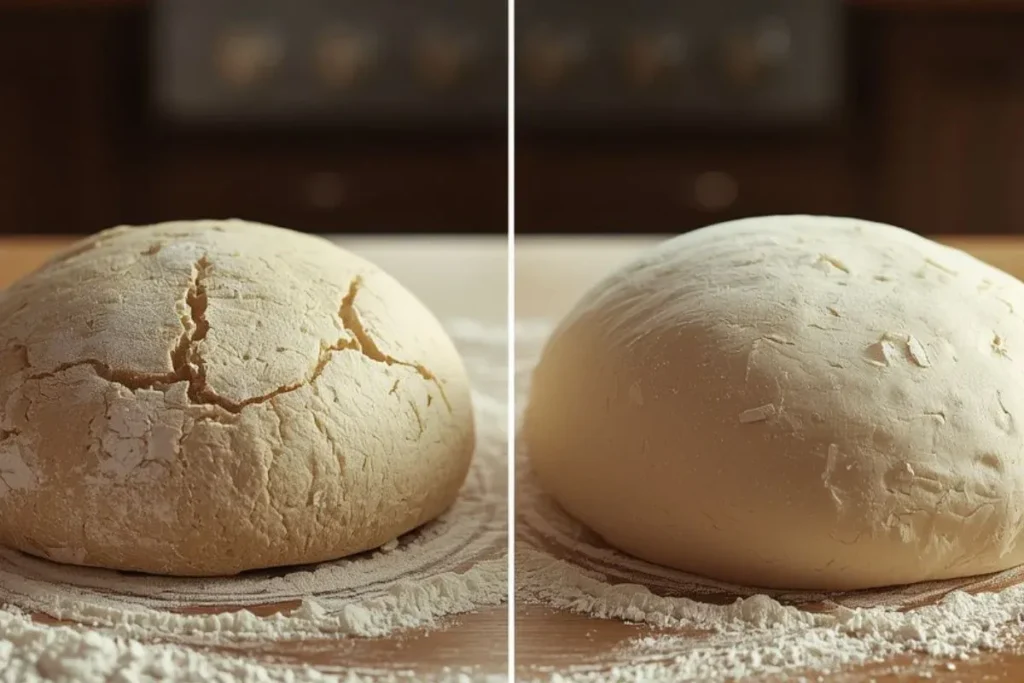
1. You Used Too Much Flour
The most common cause by far. The dough feels a little sticky during kneading, so a little flour gets dusted in. Still sticky? A little more. Before long, the dough has absorbed far more flour than the recipe called for less moisture means a firmer, harder-to-stretch dough that bakes into a drier crust.
How to fix it: Measure flour by weight when you can, and only dust your work surface lightly. Good dough should feel slightly tacky, not fully dry if you’re not sure whether your dough is actually too wet or just normal, Why Is My Pizza Dough Too Sticky? covers how to tell the difference without reaching for more flour
2. Your Dough Doesn’t Have Enough Water
Water is what keeps dough soft, flexible, and stretchy. Whether it’s the recipe itself running low on hydration or flour creeping in during mixing, the result is the same dough that’s rough, prone to cracking, and drier once baked.
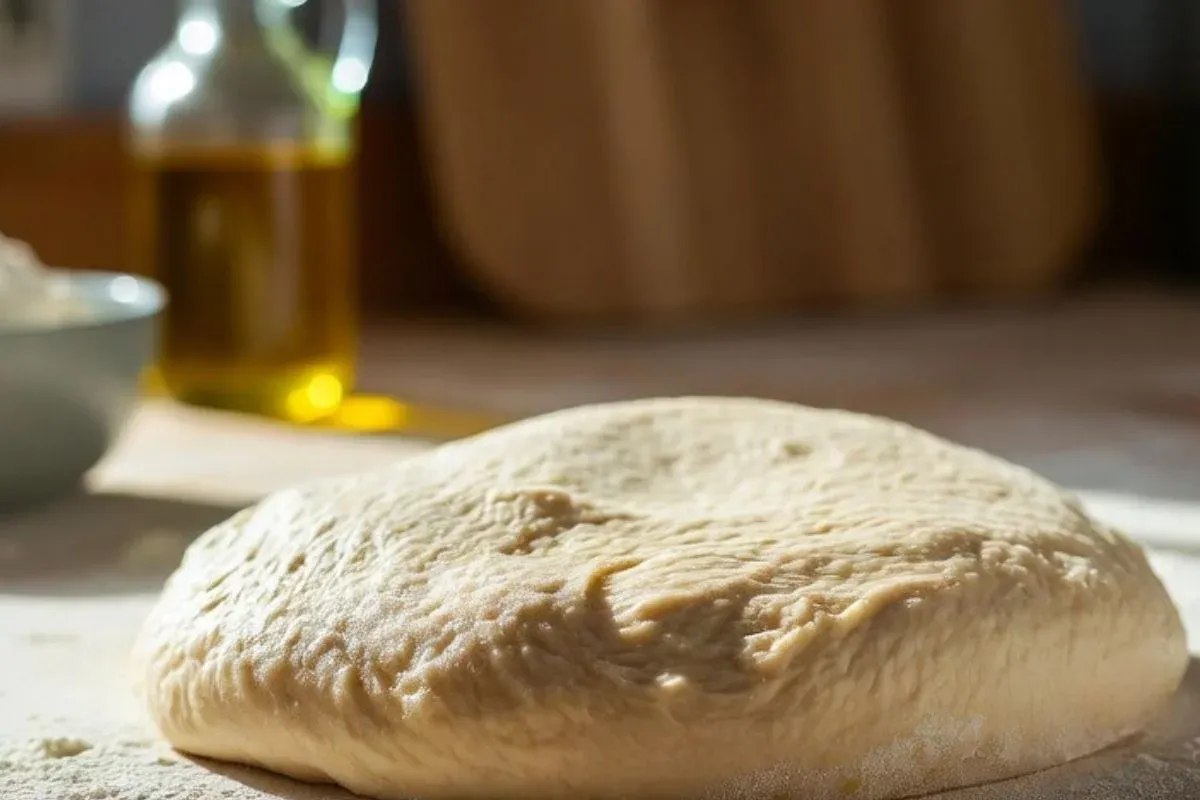
How to fix it: Follow your recipe’s water measurement exactly, ideally weighed rather than eyeballed, and resist adding flour just because the dough feels tacky. Properly hydrated dough should feel soft and only slightly sticky.
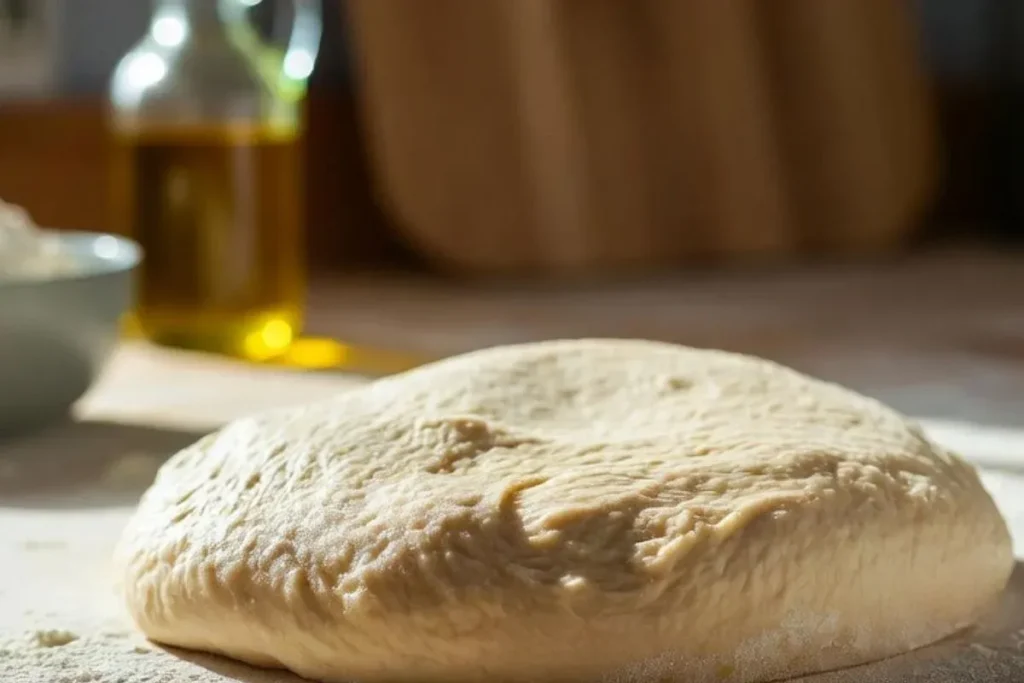
3. The Dough Was Left Uncovered While Resting
Dough loses moisture fast when it’s exposed to air. Even if the inside stays soft, the surface can dry out and form a thin skin and once you start stretching, that dry layer cracks and tears. This shows up especially often during longer proofing sessions.
How to fix it: Always cover the dough plastic wrap, an airtight container, or a clean damp towel all work. If you’re proofing multiple dough balls, keep every one covered until it’s actually in use.
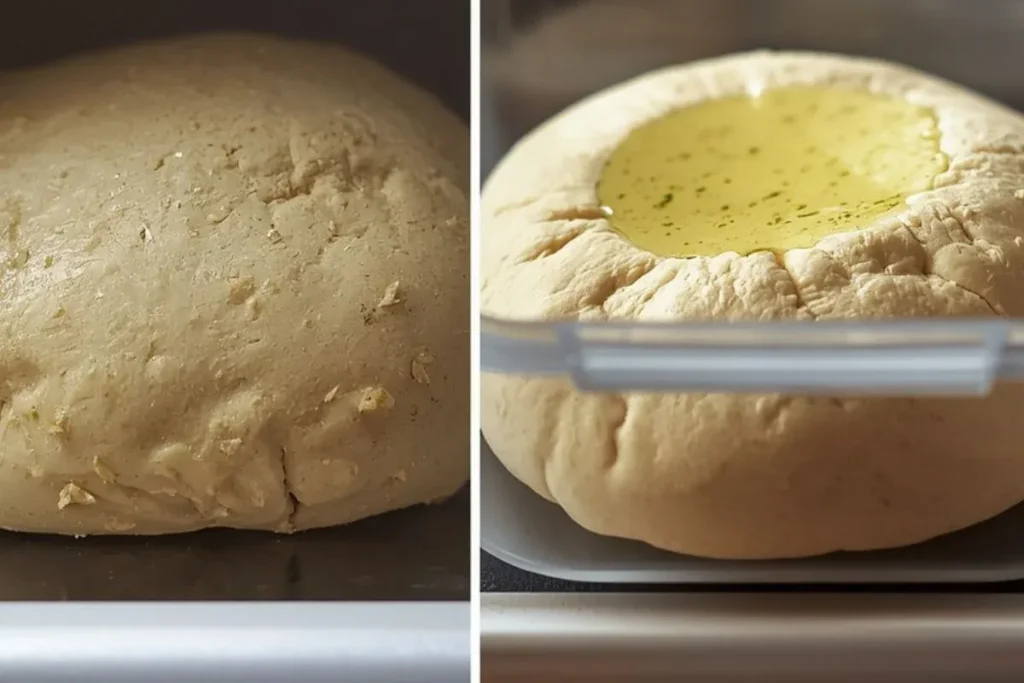
4. The Refrigerator Dried Out the Dough
Cold storage improves flavor, but the fridge’s dry air pulls moisture straight out of dough that isn’t sealed properly. Left uncovered, or in a container that isn’t truly airtight, the surface can turn dry, leathery, or slightly crusty by the next day.
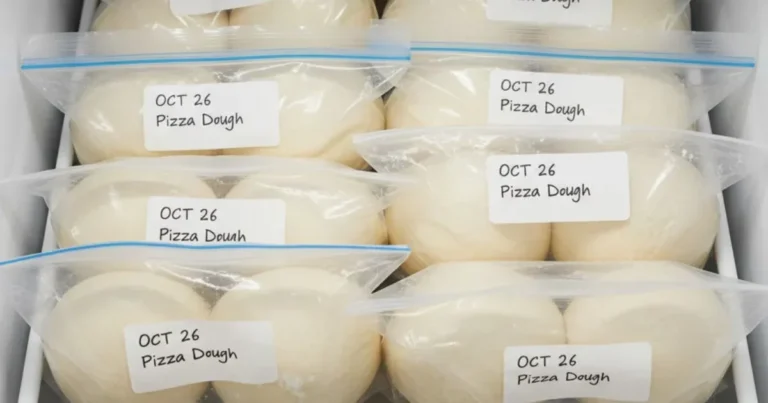
How to fix it: Store dough in an airtight container or tightly sealed bag, and lightly coat the surface with olive oil before refrigerating to cut down on moisture loss. If it’s only mildly dried out, letting it come to room temperature before shaping often helps.
5. Your Dough Proofed for Too Long
Leaving dough well past your recipe’s recommended proofing time gives moisture more time to escape, especially if it isn’t covered properly. Over-proofed dough also tends to weaken structurally, making it harder to shape even beyond the dryness itself.
How to fix it: Stick to your recipe’s proofing window, keep the dough covered the entire time, and use an airtight container if you’re proofing overnight in the fridge. Properly proofed dough feels soft and puffy, never dry or crusty.
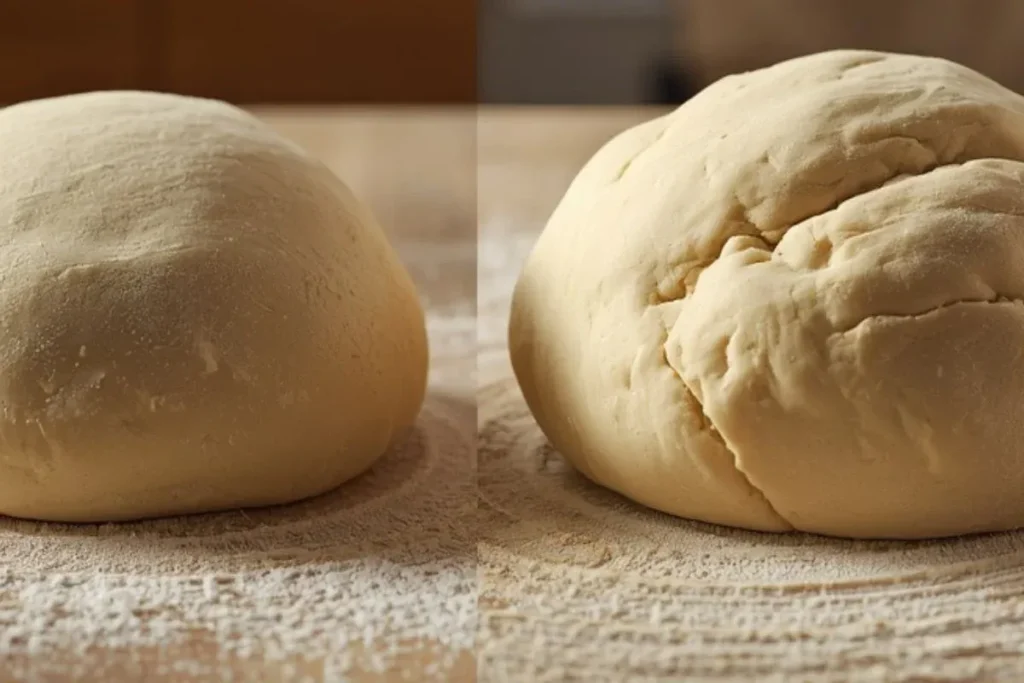
6. Your Kitchen Air Is Very Dry
Sometimes it’s not the recipe or the technique it’s the environment. Dry climates, or extended use of AC or heating, pull moisture from exposed dough faster than you’d expect.
How to fix it: Keep dough covered whenever it’s not actively being handled, avoid leaving it exposed on the counter, and if your kitchen runs especially dry, switch to an airtight proofing container instead of a loosely draped towel.
Can You Rehydrate Dry Dough?
Depends how far gone it is. If the dough is only slightly dry on the surface, resting it at room temperature while covered often lets the internal moisture redistribute enough to make it workable again.
If it’s already crumbly and breaking apart, though, there’s not much to be done the flour has absorbed whatever moisture was available, and there’s no clean way to add it back evenly. For dough that far gone, focus on preventing it next time rather than trying to rescue this batch.
If it’s just mildly dry:
- Sprinkle a small amount of water over the dough
- Knead gently until it’s absorbed
- Cover and let it rest
- Check the texture before adding any more water
- Go slowly adding too much liquid too fast makes the dough uneven
Dry vs. Cracking vs. Sticky Know the Difference
| Dry | Cracking | Sticky |
|---|---|---|
| Not enough moisture overall | Usually too dry or too cold | Too much moisture, or handled incorrectly |
Telling these apart makes it much easier to pick the right fix instead of guessing and making things worse.
Preventing Dry Dough Going Forward
- Measure flour and water accurately
- Skip unnecessary flour while kneading
- Keep the dough covered throughout every rest
- Store refrigerated dough airtight
- Let cold dough come to room temperature before stretching
- Stick to your recipe’s proofing time
Frequently Asked Questions
What to do if your pizza dough is dry?
Knead in a small amount of water or olive oil gradually until the dough becomes smooth and pliable again, adding just a little at a time to avoid over-hydrating it.
Why is my pizza dough not light and fluffy?
This is usually caused by under-proofing, too little yeast, or over-kneading, all of which limit the air pockets needed for a light, fluffy texture.
How to fix dough if too dry?
Add water a teaspoon at a time while kneading until the dough comes together smoothly, being careful not to add too much at once, which can make it overly sticky.
How to rehydrate dry pizza dough?
Knead in small amounts of water gradually, or cover the dough and let it rest, since resting can sometimes allow moisture to redistribute more evenly throughout.
Why is my pizza dough dry overnight
This often happens when dough is left uncovered in the fridge, allowing moisture to evaporate from the surface, or when the dough was under-hydrated to begin with
Why is my pizza dough dry in the fridge
Refrigeration can dry out dough if it isn’t tightly covered, since the cold, dry air pulls moisture from the exposed surface over time.
Why is my pizza dough dry in the oven
This is usually caused by baking at too high a temperature for too long, or starting with dough that was already under-hydrated before shaping.
Pizza dough too dry after rising
This can happen if the dough was left uncovered during proofing, allowing surface moisture to evaporate. Knead in a small amount of water to restore its texture.
How to fix dry pizza dough
Knead in a small amount of water or olive oil gradually until the dough becomes smooth and pliable again, adding just a little at a time to avoid over-hydrating it.
Pizza dough didn’t rise can I still use it
Yes, you can still use it, though the crust will be denser and less airy. It’s completely safe to eat, just different in texture than a properly risen dough.
Why does my pizza dough puff up
Puffing is caused by trapped gas from yeast fermentation expanding during baking, which is normal and desirable, especially at the crust edges where it creates the characteristic airy rim.
why is my pizza dough dry and hard
This is typically caused by under-hydration, overbaking, or leaving the dough exposed to air for too long, all of which pull moisture out and create a tough, dry texture.
why is my homemade pizza dough dry
Homemade dough can turn out dry from too little water in the recipe, over-flouring while kneading, or not covering it properly during proofing, letting moisture escape
Can dry dough be saved?
Sometimes, if it’s only mildly dry a small amount of water kneaded in gently can help. Once dough is already fully mixed and badly dried out, though, restoring it evenly is difficult. Prevention is far easier than repair here.
Final Thought
Dry pizza dough almost never means your recipe is wrong it usually means moisture escaped somewhere along the way, whether that’s too much flour, not enough water, or exposure during resting, storage, or proofing. Measure carefully, keep the dough covered, store it properly, and you’ll consistently get dough that’s soft and easy to stretch instead of stiff and cracking.
Want to troubleshoot pizza dough from every angle? Check out Easy Homemade Pizza Dough for Beginners, Why Is My Pizza Dough Too Sticky?, Why Is My Pizza Dough Cracking?, Why Is My Pizza Dough Shrinking?, Why Is My Pizza Dough Too Elastic?, and Why Is My Pizza Dough Tough?