Why Is My Pizza Dough Too Elastic? 10 Reasons It Won’t Stretch
Quick answer: Pizza dough becomes too elastic when the gluten network is too tight or hasn’t had time to relax. The usual causes are not resting long enough, over-kneading, cold dough straight from the fridge, high-protein flour, low hydration, or trying to stretch before the dough is ready. A little elasticity is normal and even desirable – gluten is what helps dough hold its shape. The problem is specifically when it immediately snaps back, shrinks, or fights you the whole way.
You stretch it into a nice circle, let go, and watch it pull right back into something smaller. It feels less like dough and more like a rubber band. This is one of the most fixable pizza problems there is – almost always a matter of giving the gluten time to relax.
Signs Your Dough Is Actually Too Elastic
- Shrinks back after you stretch it
- Feels tight, firm, and rubber-band-like
- Refuses to spread, stays thick in the center
- Tears when you push it before it’s ready
- Bakes into a denser, heavier crust because it fought you into forcing air out
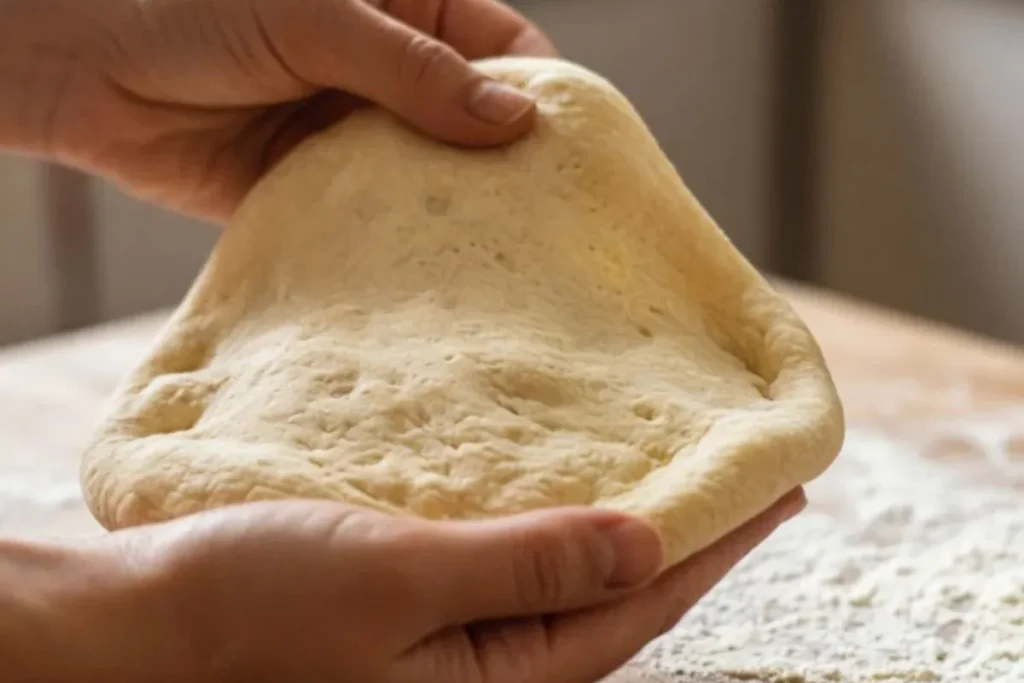
Quick test: pinch off a small piece and gently stretch it with your fingers. Healthy dough stretches gradually and holds its new shape. Overly elastic dough shrinks back almost immediately or feels stiffly resistant the whole time.
How to Tell What’s Causing It
| What you’re noticing | Most likely cause | What to try |
|---|---|---|
| Snaps back right after stretching | Not rested long enough | Cover and rest 20-30 minutes |
| Feels tight, smooth, and springy | Over-kneaded | Rest longer, handle gently going forward |
| Straight from the fridge, resists everything | Too cold | Warm to room temp before shaping |
| Consistently tight no matter what | Too much gluten development | More rest, gentler handling, lower-protein flour |
| Stiff, dry, resistant | Hydration too low | Increase water gradually in future batches |
| Tight and dense-feeling | Not fermented long enough | Give it a longer rise |
| Springs back fast, few air bubbles | Under-proofed | Let it proof further before shaping |
| Fights you the moment you take it out | Stretched too soon after kneading/dividing | Give it a bench rest first |
| Tears under pressure | Pulled too aggressively | Press from center outward, don’t yank |
If Elasticity Isn’t Your Only Dough Struggle
Tight, resistant dough often overlaps with other dough problems – sticky, dense, hard to shape. The Pizza Dough Problem Solver walks through diagnosing and fixing each of these individually instead of guessing your way through every batch.

Understanding Gluten Development – Why This Happens at All
Elasticity comes from gluten, the protein network that forms when flour and water combine and get worked together. Gluten gives dough its strength and structure – without it, dough would be too weak to hold its shape or trap the gas that makes pizza crust light and airy. The problem isn’t gluten itself, it’s gluten that’s too tight relative to how relaxed it needs to be for stretching.
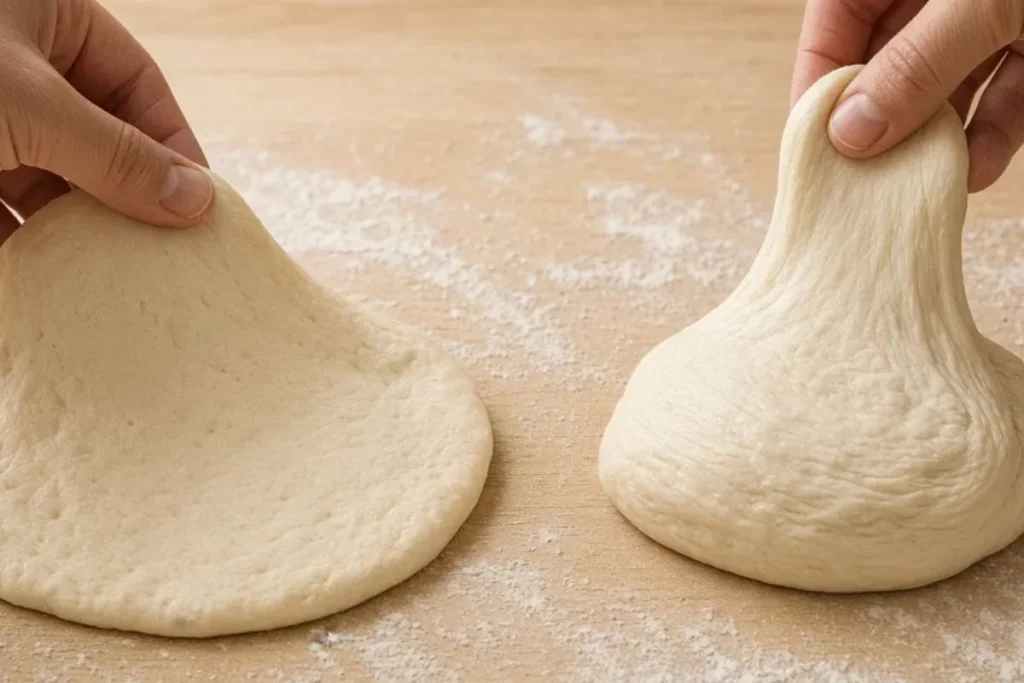
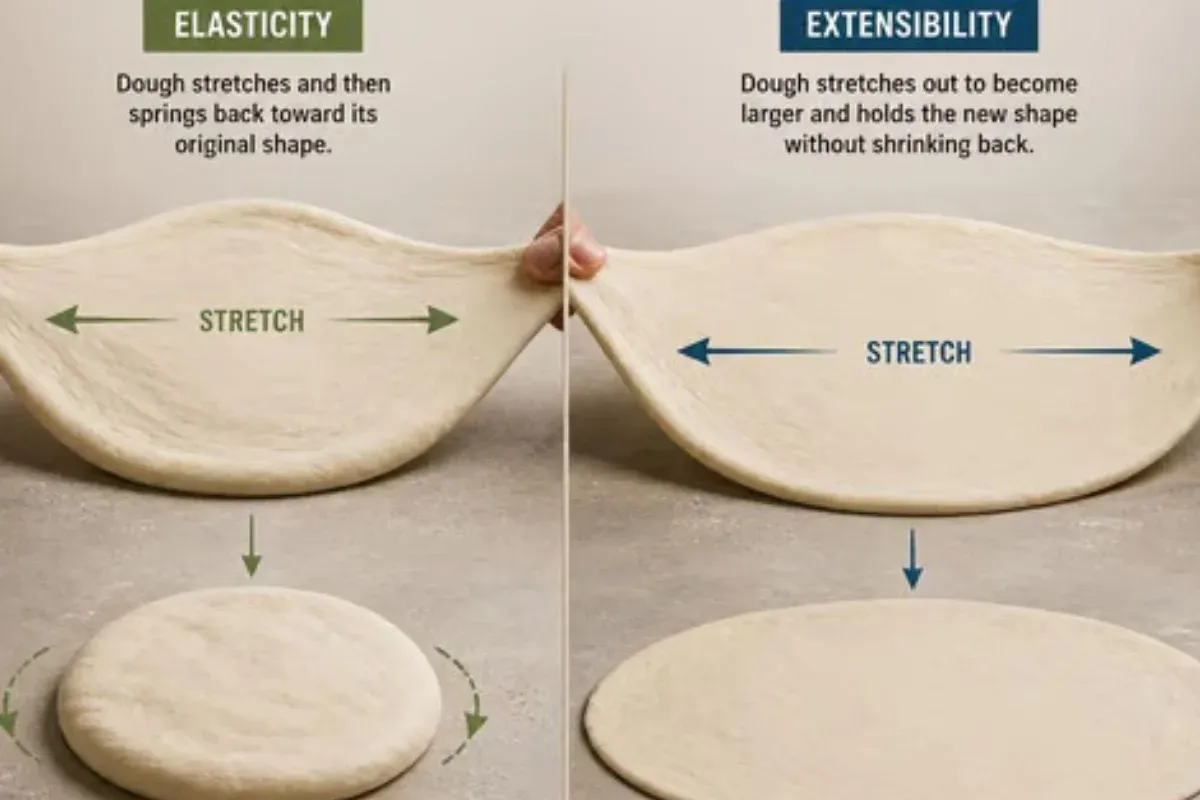
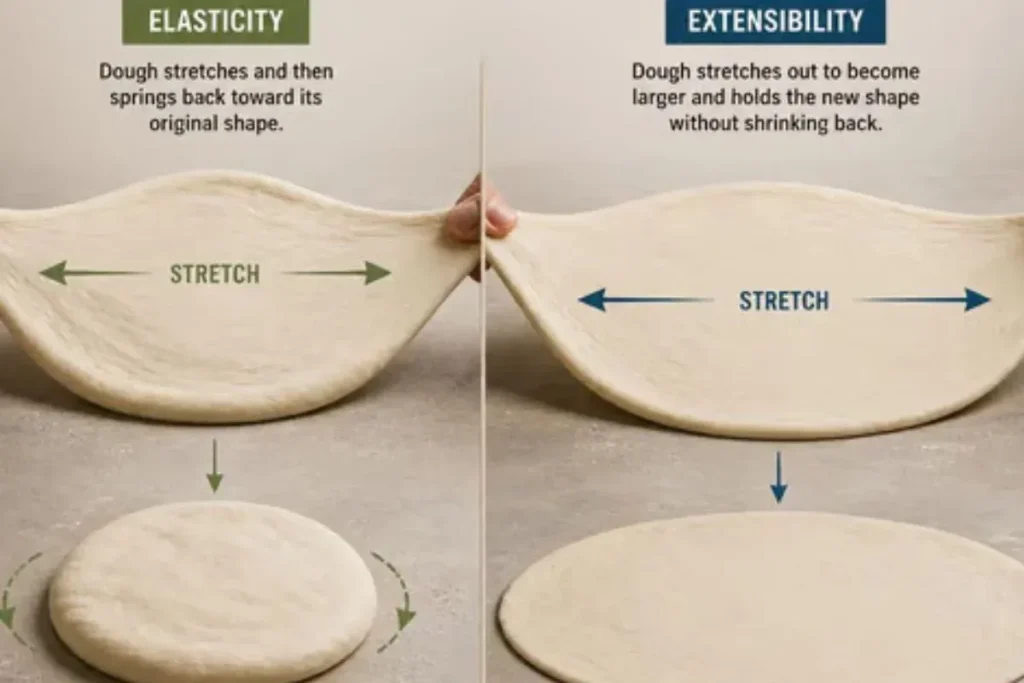
Elasticity vs. extensibility – the balance you actually want:
| Elasticity | Extensibility |
|---|---|
| The dough’s ability to spring back and hold its shape | The dough’s ability to stretch without tearing |
Good pizza dough needs both. Too much elasticity relative to extensibility is exactly what “overly elastic” dough is.
1. You Didn’t Let the Dough Rest Long Enough
The most common cause. Right after kneading, gluten is tight and organized – it needs time to loosen before it’ll stretch easily. Shape it too soon and it snaps back, resists forming a circle, and feels stiff.
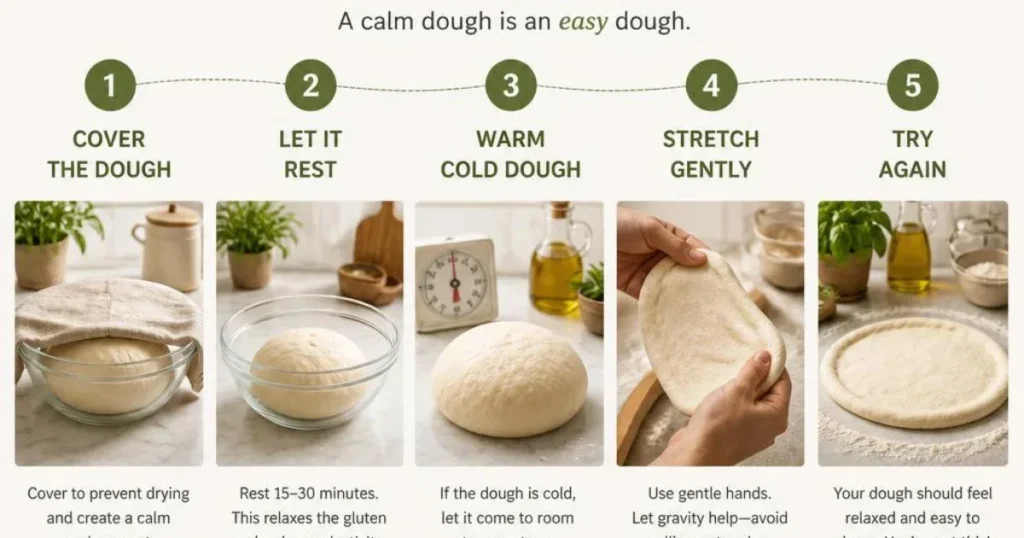
How to fix it: Rest at least 20-30 minutes after kneading, covered so the surface doesn’t dry out. If it’s chilled, let it come to room temperature first. A short rest often makes a dramatic difference.
2. You Over-Kneaded the Dough
Kneading builds the gluten dough needs but too much of it creates dough that’s overly strong and difficult to stretch. Highly developed gluten makes dough very smooth, firm, springy, and resistant to shaping, which is exactly what “fighting back” feels like.
How to fix it: If it’s already happened, extra resting time helps the gluten relax – avoid adding more flour or forcing the shape. Going forward, knead only until the dough turns smooth and elastic, not further.
3. Your Dough Is Too Cold
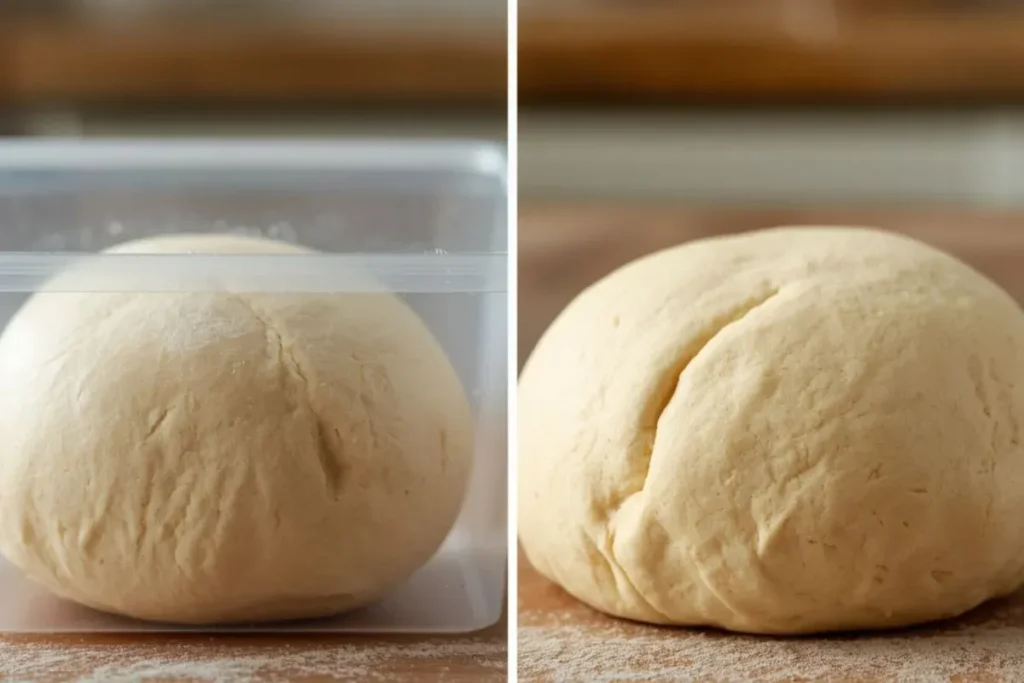
Cold dough is almost always more elastic than dough that’s warmed up. Great for slow, flavor-building fermentation in the fridge but the cold also tightens gluten and reduces flexibility, which shows up as dough that’s hard to stretch and quick to shrink back.
How to fix it: Pull it from the fridge and let it sit covered at room temperature before shaping roughly 1-2 hours for individual dough balls, longer for bigger portions, depending on size and room temperature.
4. Your Dough Has Developed Too Much Gluten
This can stack on top of over-kneading – long kneading, high-protein flour, extended mixing time, and aggressive handling can all push gluten development further than the dough actually needs. Strong gluten holds together well, but past a point it just gets harder to stretch.
How to fix it: More resting time, gentler handling, and if this keeps happening, a slightly lower-protein flour. The goal isn’t removing gluten – it’s finding the balance between strength and stretchability.
5. You’re Using Too Much Bread Flour
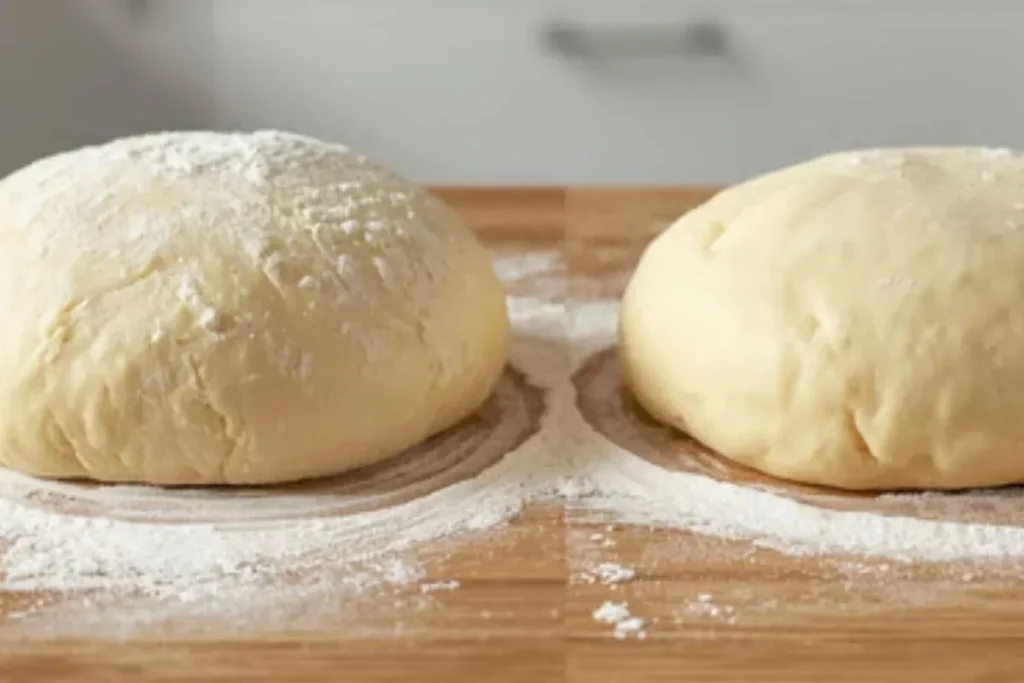
Bread flour’s higher protein content builds more gluten, which brings strength and chewiness – helpful for some pizza styles, but it can also mean tight, resistant dough that’s more likely to snap back and harder to shape by hand.
How to fix it: Try Italian “00” flour for a softer, more extensible dough, or blend bread flour with all-purpose to dial back the gluten strength. Skip adding extra flour during shaping unless it’s genuinely necessary.
6. Your Dough Hydration Is Too Low
Water lets gluten move and gives dough its extensibility. Too little water and the gluten network tightens up – the dough turns stiff, dry, harder to stretch, and more elastic than you want.
How to fix it: Increase hydration gradually rather than all at once. A beginner-friendly starting point is around 60-65% hydration; higher-hydration doughs feel softer and more open but take more practice to handle.
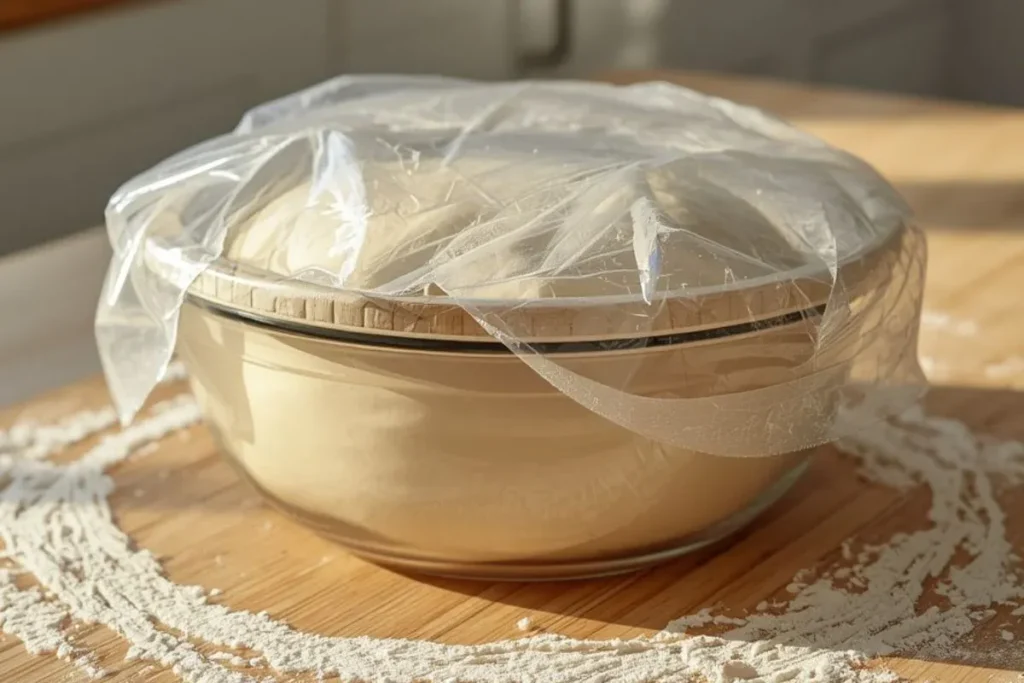
7. Your Dough Hasn’t Fermented Long Enough
Fermentation does more than build flavor – enzyme and yeast activity also physically soften the dough’s structure over time, making it easier to stretch. Cut fermentation short and the dough stays tighter, denser, and more resistant, which is common with quick-rise recipes that don’t allow much time.
How to fix it: Give it more time – a longer room-temperature rise, or cold fermentation in the fridge for both flavor and texture benefits. Slower fermentation reliably produces easier-to-stretch dough.
8. Your Dough Is Under-Proofed
Slightly different from short fermentation – this is dough that has yeast working but simply hasn’t developed enough structure yet. It springs back fast, feels too tight, shows few air bubbles, and bakes dense.
How to fix it: Let it keep rising until it feels softer, slightly puffy, and easier to press – a dough that feels alive and relaxed rather than heavy and resistant.
9. You’re Stretching the Dough Too Soon
Freshly divided or freshly kneaded dough carries high gluten tension. Jump straight to stretching and it pulls back, shrinks, and won’t hold the shape you’re giving it.
How to fix it: After dividing into balls, give them a short bench rest before shaping – that alone loosens the gluten enough to make a real difference.
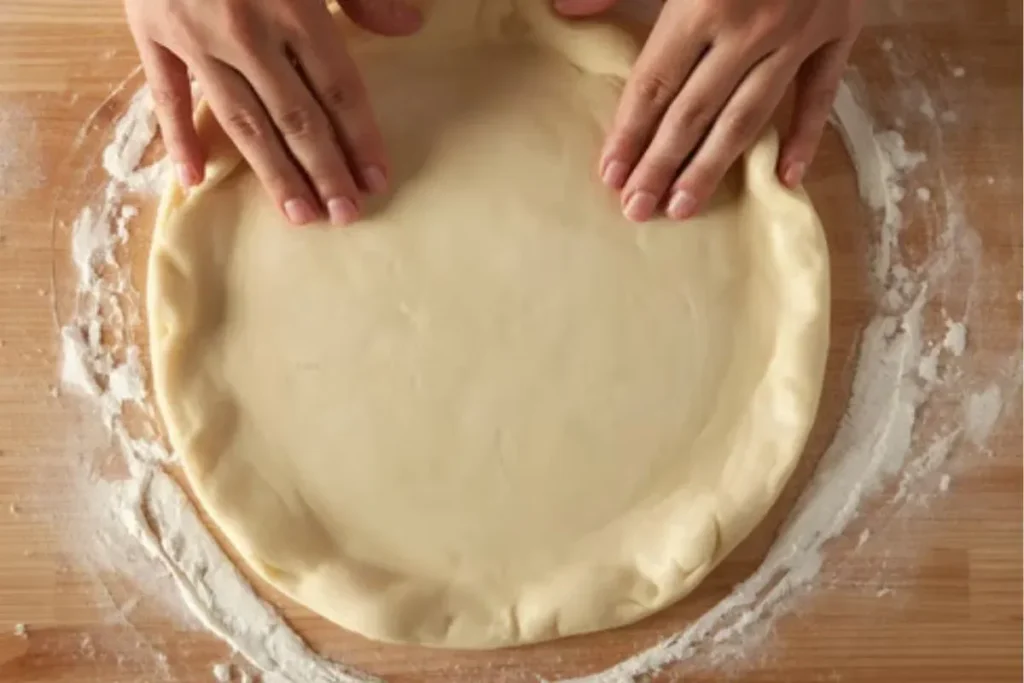
10. You’re Pulling Instead of Stretching Gently
Technique matters as much as the dough itself. Aggressively pulling the edges creates tension and risks tearing, especially on dough that hasn’t fully relaxed yet.
How to fix it: Press gently from the center outward, leave a slightly thicker edge for the crust, and rotate the dough as you work rather than yanking one section repeatedly. If it starts fighting back, stop and let it rest instead of pushing through patience beats force here every time.
Quick-Check Before You Shape
Ask yourself:
- Did the dough rest long enough?
- Is it at room temperature?
- Was it covered while resting?
- Am I stretching gently, not forcing it?
- Am I giving it time instead of fighting it?
A “no” to any of these is usually exactly why it keeps shrinking back.
Is Some Elasticity Actually Normal?
Yes – pizza dough is supposed to have some elasticity. It’s what lets it hold its shape and gives the finished crust structure. The issue is only when elasticity outweighs extensibility so much that the dough won’t cooperate at all. The goal was never zero elasticity – a dough with none would be too weak to hold together. You want relaxed elasticity: enough structure to work with, enough give to stretch easily.
Frequently Asked Questions
How do you make pizza dough less elastic?
Let the dough rest longer before shaping to relax the gluten, and avoid overworking it during kneading, since excessive gluten development is what makes dough overly elastic and springy.
Why is my pizza dough so stretchy?
Strong elasticity usually comes from well-developed gluten, often from thorough kneading or high-protein flour. Letting the dough rest longer helps relax it for easier shaping.
How long should pizza dough rest before being stretched?
Pizza dough should generally rest at least 20-30 minutes at room temperature after bulk fermentation, though many recipes recommend resting portioned dough balls for 1-2 hours for easier stretching.
How to make a good stretchy pizza dough?
Use bread flour or high-protein flour for stronger gluten development, knead thoroughly, and allow adequate rest time so the dough is both elastic and easy to stretch.
Pizza dough is sticky after rising
This is normal to some extent, especially with high-hydration dough. If it’s too sticky to handle, lightly flour your hands and work surface rather than adding more flour to the dough itself.
Why my pizza dough is not stretchy
This usually happens when the dough is under-hydrated, under-kneaded, or too cold, all of which limit gluten development and elasticity needed for stretching.
Pizza dough too stretchy
Overly stretchy dough is usually a sign of strong gluten development. Let it rest longer before shaping so the gluten relaxes and becomes easier to work with.
Why is my pizza dough tough after baking
Tough crust is usually caused by over-kneading, too little hydration, or under-proofing, all of which prevent the dough from developing a light, tender texture
Why is my pizza dough too elastic in the fridge
Cold temperatures tighten gluten structure, making refrigerated dough feel more elastic. Letting it warm to room temperature for 20-30 minutes before shaping helps it relax
Why is my pizza dough too elastic in the oven
This typically means the dough was shaped before the gluten had time to relax, causing it to spring back and shrink during baking instead of holding its stretched shape.
Why is my pizza dough too elastic overnight
Cold fermentation strengthens gluten over time, which can make dough feel tighter and more elastic. Letting it come to room temperature before shaping helps it relax and stretch easier.
Final Thought
If your dough keeps shrinking back, snapping like a rubber band, or refusing to stretch, the recipe usually isn’t the problem – gluten tension is. The most common causes are insufficient rest, over-kneading, cold dough, high-protein flour, low hydration, and stretching before the dough’s ready. Most of the time, a simple 20-30 minute rest is enough to relax things and make the dough genuinely easier to shape.
The goal was never dough with zero elasticity – it’s dough with the right balance of strength and give. Get the flour, water, fermentation, and patience right, and elastic dough stops being a fight.
You May Also Like
- Easy Homemade Pizza Dough for Beginners
- Why Is My Pizza Dough Too Sticky?
- Why Is My Pizza Crust Not Crispy?
- Why Is My Pizza Crust Soggy?
- Why Is My Pizza Sticking to the Peel?