
Why Is My Pizza Crust Soggy? 10 Common Reasons (And How to Fix Them)
Quick answer: Pizza crust turns soggy from too much moisture – sauce, cheese, wet toppings, or over-hydrated dough – or from not enough heat to evaporate that moisture before it soaks in. An under-preheated stone, a low oven temperature, wrong rack position, or pulling the pizza before it’s fully baked are the usual culprits. Fix the moisture or the heat side, and the crust bakes crisp instead of soft.
You pull the pizza out expecting a crisp, golden bottom, and instead it’s soft, wet, or limp. It’s one of the most common pizza problems, whether you’re baking from scratch, reheating leftovers, or cooking frozen pizza and it’s almost always about moisture or heat.
Signs Your Pizza Crust Is Soggy
- Bottom feels wet rather than crisp
- Middle bends or collapses when you lift a slice
- Cheese slides off from trapped moisture underneath
- Crust looks pale on the underside
- Center feels undercooked
- Water visibly pools beneath the toppings after baking
How to Tell What’s Causing It
| What you’re noticing | Most likely cause | What to try |
|---|---|---|
| Wet everywhere sauce touched | Too much sauce | Thinner layer, leave the edge bare |
| Soft under a heavy cheese layer | Too much cheese | Use moderately, pat fresh mozzarella dry |
| Wet spots under vegetables | Toppings too wet | Drain or pre-cook watery vegetables |
| Bottom stayed pale despite a hot oven | Stone/tray never fully preheated | Preheat stone 45–60 minutes |
| Took a long time to bake through | Oven temperature too low | Push to 475–500°F (245–260°C) if possible |
| Soft even with good technique | Dough over-hydrated | Check water measurement against recipe |
| Cheese looked done, crust wasn’t | Pulled too early | Check the underside before removing |
| Frozen pizza came out wet underneath | Baked incorrectly | Preheat fully, don’t thaw first, bake on a hot surface |
| Center specifically stays raw-feeling | Genuinely undercooked | Extra 2–4 minutes, check again |
If your pizza’s crust is soft but not exactly wet, that might be a different problem entirely – see Why Is My Pizza Crust Not Crispy? for baking-technique fixes rather than moisture ones.
Crust Sorted – Dough Giving You Trouble Too?
If dough handling is part of your soggy-crust problem – too wet, hard to shape, or inconsistent. The Pizza Dough Problem Solver walks through diagnosing and fixing that side as well.

10 Reasons Your Pizza Crust Is Soggy
1. You’re Using Too Much Sauce
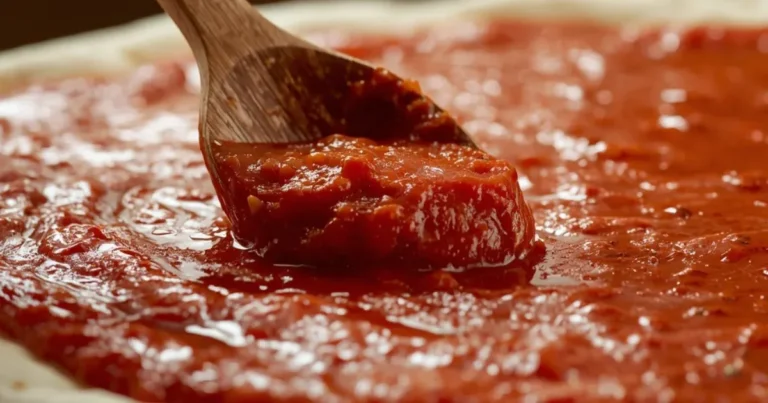
The number one reason homemade pizza becomes soggy is using more sauce than the crust can handle. As the pizza bakes, the excess liquid soaks into the dough before the bottom has time to crisp. Instead of baking, the crust steams
How to fix it
- Spread a thin, even layer of pizza sauce
- Leave about ½ inch (1-1.5 cm) around the edge for the crust
- Use thick pizza sauce instead of watery tomato sauce
- Remember, more sauce doesn’t always mean more flavor

2. You Added Too Much Cheese
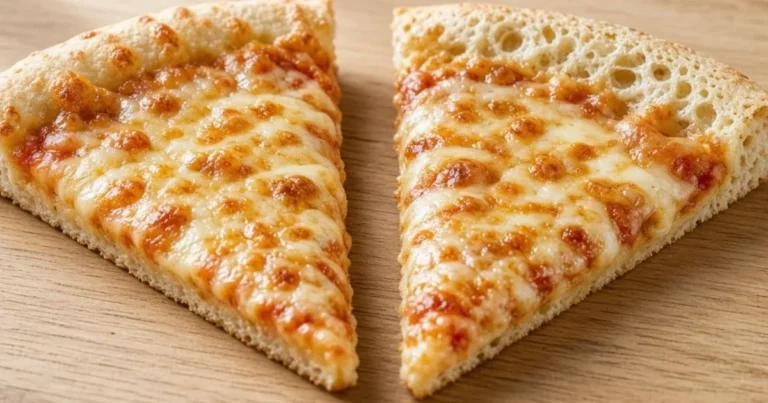
Cheese melts beautifully but it also releases moisture and oil. Adding too much cheese traps steam on top of the pizza, preventing the crust from drying and becoming crisp. Fresh mozzarella is especially high in moisture
How to fix it
- Use cheese in moderation
- Pat fresh mozzarella dry with paper towels before using it
- Choose low-moisture mozzarella for a crispier pizza
If your cheese refuses to melt properly, read our guide on Why Is My Cheese Not Melting? Choosing the right cheese improves both texture and flavor
3. Your Toppings Are Too Wet
Fresh vegetables release water while baking. Common examples include:
- Tomatoes
- Mushrooms
- Spinach
- Zucchini
- Pineapple
As this moisture collects on the pizza, the crust underneath absorbs it instead of crisping
How to fix it
- Drain vegetables before adding them
- Pat tomatoes dry
- Lightly cook mushrooms or spinach first
- Avoid piling on too many wet toppings. Less moisture means a crispier crust
4. Your Pizza Stone Wasn’t Fully Preheated
Even if the oven reaches the correct temperature, the pizza stone may still be too cool. A cool stone can’t evaporate moisture quickly enough, so the dough stays soft
How to fix it
- Preheat the pizza stone for 45–60 minutes
- Place it in the oven before turning the oven on
- Bake directly on the fully heated stone
If your pizza sticks instead of becoming soggy, our guide on Why Is My Pizza Sticking to the Stone? explains exactly why that happens and how to prevent it
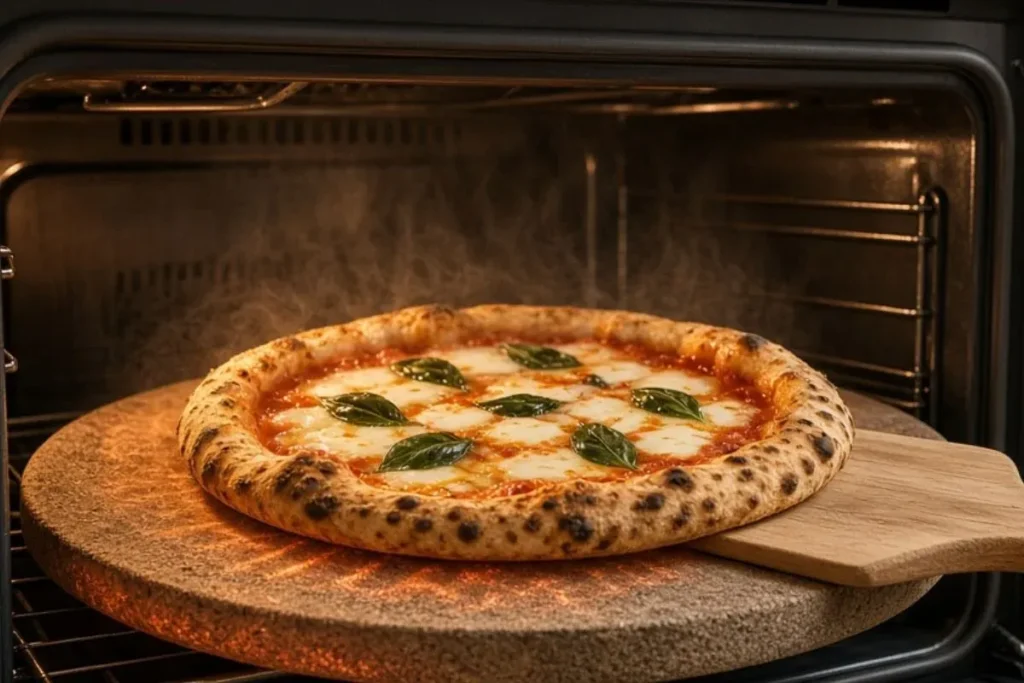
5. Your Oven Temperature Is Too Low
A low oven temperature is one of the biggest reasons pizza crust becomes soggy. Instead of baking quickly, the dough sits in the oven for longer, allowing moisture from the sauce, cheese, and toppings to soak into the crust. The result is a soft, damp base instead of a crisp one
How to fix it
- Preheat your oven to 475-500°F (245-260°C) if your oven allows
- Let the oven finish preheating before baking
- Use the convection setting if available to improve heat circulation
- A hotter oven helps moisture evaporate before it can soak into the crust
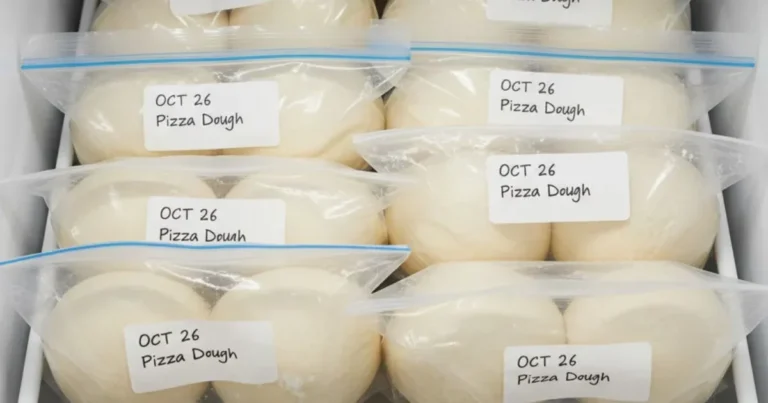
6. Your Dough Contains Too Much Water
Pizza dough needs moisture but dough that’s too wet struggles to bake into a crisp crust. Excess water creates steam inside the dough, leaving the bottom soft even after the top looks fully cooked
How to fix it
- Measure ingredients accurately
- Avoid adding extra water unless your recipe specifically requires it
If the dough feels unusually sticky, lightly dust it with flour while shaping. If your dough is difficult to handle before baking, our guide on Why Is My Pizza Dough Too Sticky? explains how to fix overly wet dough without ruining the texture

7. You Removed the Pizza Too Early
Sometimes the pizza simply hasn’t finished baking. The cheese melts much faster than the crust cooks, making the pizza look ready even though the bottom is still undercooked. Removing it too early leaves trapped moisture inside the crust
How to fix it
Before removing the pizza, check that:
- The bottom is golden brown
- The edges feel firm
- The center doesn’t sag when lifted with the peel
- If necessary, bake it for another 1–3 minutes, checking frequently
8. Steam Stayed Trapped After Baking
Even a perfectly baked pizza can become soggy if steam has nowhere to escape. Leaving the pizza sitting on a hot tray immediately after baking traps moisture underneath, softening the bottom within minutes
How to fix it
- Transfer the pizza to a wire cooling rack for 1–2 minutes after baking
- If using a cutting board, avoid covering the pizza immediately
- Slice only after some of the steam has escaped. This simple step helps preserve the crispy bottom you worked hard to create
If your crust becomes hard instead of soggy after cooling, read our guide on Why Is My Pizza Crust Hard? It explains why pizza can become dry and tough after baking
9. Your Frozen Pizza Was Cooked Incorrectly
Frozen pizza is convenient but it’s also one of the easiest pizzas to end up with a soggy crust. The biggest mistakes are baking it on a cold tray, not preheating the oven, or letting the pizza thaw before cooking. All of these allow moisture to collect underneath the crust instead of evaporating
How to fix it
- Always preheat the oven fully before baking
- Bake directly on the oven rack or a preheated pizza stone if the package instructions allow
- Don’t thaw frozen pizza unless the manufacturer specifically recommends it
- Follow the recommended baking time closely
A properly cooked frozen pizza should have a crisp bottom, not a soft one
10. The Crust Is Actually Undercooked
Sometimes what feels like a soggy crust is simply dough that hasn’t finished cooking. The top may look done because the cheese is melted but the center of the crust is still raw or partially baked. This is especially common with thick pizzas or overloaded toppings
How to fix it
- Check the underside before removing the pizza from the oven
- If the bottom is pale, continue baking for 2–4 more minutes
- If the cheese is already browning too much, loosely cover the top with foil while the crust finishes baking
A fully cooked crust should feel firm, dry and lightly crisp underneath

How to Fix a Soggy Pizza
If your pizza is already soggy, don’t throw it away. In many cases, you can make it much crispier
1. Put it back in the oven
Bake the pizza for another 2–5 minutes on a preheated pizza stone or baking tray
2. Reheat it in a skillet
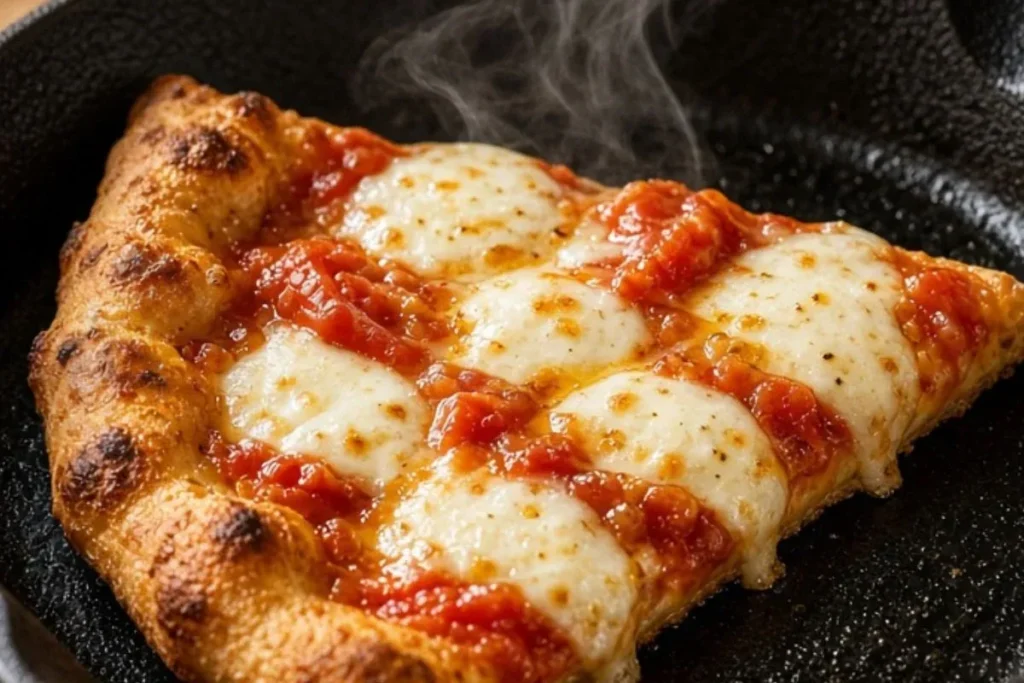
Place the slice in a dry non-stick or cast-iron skillet over medium heat for 2–4 minutes. This crisps the bottom without drying out the toppings
3. Use an air fryer
Heat the pizza at 350-375°F (175-190°C) for 3–5 minutes. The circulating hot air quickly restores a crispy crust
4. Avoid reheating in the microwave
A microwave traps steam, making the crust even softer. If you must use one, finish the pizza in a skillet afterward to crisp the bottom
If your pizza becomes crispy but burns too easily, our guide on Why Is My Pizza Crust Burnt? explains how to get beautiful browning without scorching the crust
How to Prevent a Soggy Pizza Crust
The easiest way to fix a soggy pizza is to stop it from happening in the first place. Follow these simple habits every time you bake
- Preheat your oven properly Always allow your oven to reach its full baking temperature before putting the pizza inside
- Preheat your pizza stone or pizza steel Give it 45–60 minutes to absorb enough heat. A hot baking surface instantly starts crisping the bottom of the crust
- Use less sauce A thin layer of sauce gives plenty of flavor without soaking the dough
- Pat wet toppings dry Fresh mozzarella, tomatoes, mushrooms, spinach and other vegetables should be dried or partially cooked before going on the pizza
- Don’t overload your pizza More toppings mean more moisture. Keeping toppings balanced allows the crust to bake properly
- Let steam escape after baking Place the pizza on a cooling rack or cutting board for a minute before slicing. This prevents trapped steam from softening the bottom
If your crust turns crispy but becomes too hard after baking, our guide on Why Is My Pizza Crust Hard? explains how to keep the perfect balance between crisp and chewy

Frequently Asked Questions
How do I make my pizza crust more crispy?
Preheat a pizza stone or steel for at least 30 minutes before baking, use a high oven temperature, and avoid overloading toppings, which can trap moisture and prevent crisping.
How to stop pizza from getting soggy?
Preheat your baking surface, avoid excess sauce or watery toppings, and par-bake the crust briefly before adding toppings to create a moisture barrier.
Why is my pizza crust wet?
This is usually caused by too much sauce, high-moisture toppings like fresh mozzarella or vegetables, or an oven that isn’t hot enough to evaporate moisture quickly during baking.
Can you eat soggy pizza dough?
Yes, it’s safe to eat, though the texture will be less appealing. Soggy dough is a texture issue from excess moisture, not a food safety concern
Why is my pizza crust soggy on the sides
This often happens when dough is stretched unevenly, leaving thinner sides that can’t support toppings well, or when sauce spreads too close to the edges.
Why is my pizza crust soggy in the middle
A soggy center is usually caused by too much sauce or moisture-heavy toppings concentrated in that area, combined with insufficient oven heat to crisp the middle before toppings release liquid.
Why is my frozen pizza soggy in the middle
This typically happens when the oven isn’t preheated fully, the pizza is baked directly on a cold pan, or ice crystals from freezing release excess moisture during baking.
How to fix soggy pizza bottom
Bake on a preheated pizza stone or steel, use less sauce, and make sure your oven is fully preheated to a high temperature before the pizza goes in.
How to keep pizza crust from getting soggy in the microwave
Microwaving tends to trap steam and soften crust regardless of technique; using a microwave crisper pan or reheating in a skillet or oven instead gives much better results.
Pizza soggy in middle
This is usually caused by too much sauce or moisture-heavy toppings in the center, combined with an oven that isn’t hot enough to crisp the crust before it absorbs excess liquid
Final Thought
A soggy pizza crust is almost always the result of too much moisture or not enough heat. Whether it’s excess sauce, watery toppings, a cool pizza stone or undercooked dough, small adjustments can completely transform your homemade pizza
By baking at a high temperature, reducing moisture, preheating your baking surface and letting steam escape after baking, you’ll consistently enjoy a crisp, golden crust instead of a soft, soggy one